The Hidden Fees of Corporate Seasonal Campgrounds (And How to Spot Them)
Most "starting at" prices at corporate campgrounds aren't close to what you'll actually pay. Here's the fee-stacking playbook to watch for — and the one question that exposes all of it.

Owner, Pine Ridge Campground
Army veteran and entrepreneur who co-founded Pine Ridge Campground in 2017. With years of hands-on experience in seasonal RV camping and campground operations, Jamie shares practical insights for campers exploring Pennsylvania.
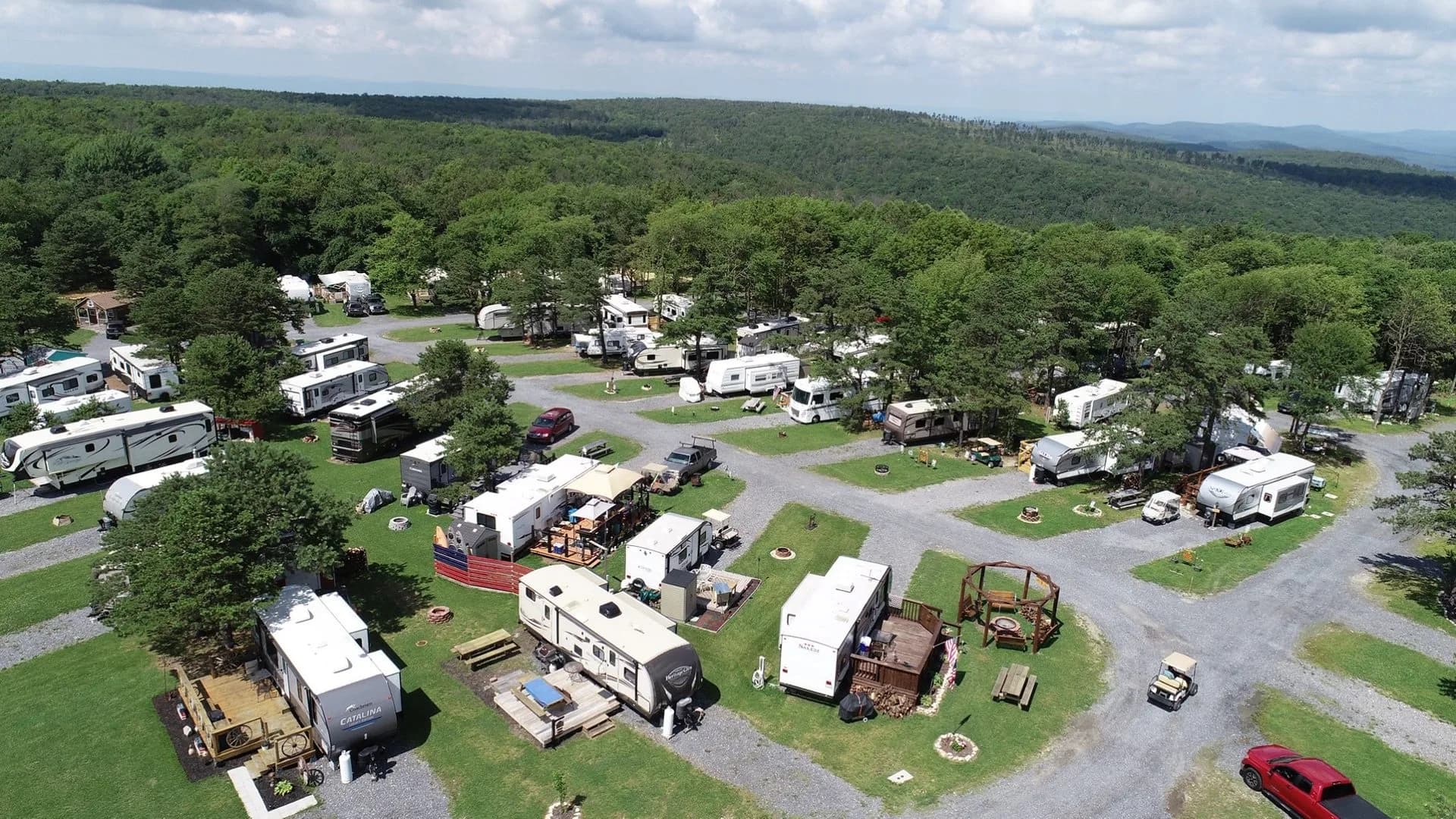
A few weeks ago a couple drove up to Pine Ridge for a tour. They'd just come from a property up the road — I won't name it here, but it's one of the corporate resort-style operations — and they had a printout of pricing that, on the cover, said "Seasonal sites starting at $1,899."
By the time they finished reading the rest of the document on the tour, the real annual number was over $11,000. They were furious — not at Pine Ridge, but at having spent four months thinking they were comparing apples to apples. They weren't. The "starting at" number was the site lease. Everything else — membership purchase, annual dues, electric, dump fees, WiFi, a per-pet charge — was layered on top, line by line, in fine print.
I'm writing this post for the next family in that position. Not to bash any specific competitor, but to lay out the fee-stacking playbook so you can spot it in any campground's pricing — corporate or otherwise.
The six fee categories nobody puts in the headline price
When a campground advertises a "starting at" rate, that number almost always represents the bare site lease and nothing else. The actual cost of camping there usually involves five other categories of charges, sometimes more. Here's the full menu.
1. The membership buy-in
This is the big one and it's specific to membership-model campgrounds (Thousand Trails, Equity LifeStyle properties, K/M Resorts, a handful of others). Before you can even lease a seasonal site, you have to buy into the membership system. Prices range from about $4,000 for a regional pass to $20,000+ for a national one. Some are refundable on resale, most aren't, and resale values can be brutal — you'll see used Thousand Trails memberships on Facebook Marketplace for 20-30% of original purchase price.
What to ask: "Is there any kind of one-time purchase required before I can lease a site?" If yes, ask what happens to that money if you leave in year 2.
2. The annual dues (separate from the site lease)
Membership campgrounds also charge annual dues on top of the membership purchase and on top of the site lease. These often run $700-$1,200/year and tend to increase 3-5% annually. Family-owned operations like ours roll everything into the lease — no separate dues — but at corporate properties this is a real line item.
What to ask: "Are there any annual dues, association fees, or HOA-style charges in addition to the site lease?"
3. Electric — passed through vs. metered vs. bundled
There are three legitimate ways a campground can handle electric:
- Bundled: The site lease includes all electric. Simple, but you're subsidizing high-AC users if you're a low user (and vice versa).
- Metered: Each site has its own meter, you pay the actual usage at cost. This is how we do it at Pine Ridge — most seasonals run $50-$150/month depending on AC and heater usage.
- Tier-based: A flat monthly add-on regardless of usage ($75-$200/month at some corporate properties).
The bait-and-switch happens when the headline price implies bundled and the contract spells out tier-based. Read the fine print on electric specifically.
What to ask: "How is electric charged — included, metered at cost, or a flat monthly add-on?"
4. The per-pet, per-vehicle, per-everything fees
Watch for: pet fees ($50-$150 per pet per year is common), additional vehicle fees ($100-$300 per extra car), golf cart registration ($75-$200), guest passes ($5-$15 per overnight guest), bonfire permits, dock fees, storage fees for non-RV items, even fees for using your own washing machine if you've installed one.
None of these are wrong on their own — campgrounds have real costs to cover. But at a corporate property, they add up to a real second number on top of the lease. A family with two dogs, two cars, and a golf cart can easily add $600-$900/year in "extras" that weren't in the brochure.
What to ask: "Can I see a full schedule of every fee that might apply — pets, vehicles, golf carts, guests, anything?"
5. The WiFi upcharge
This one always surprises people. At several corporate seasonal properties, basic WiFi is free but slow, and "premium" WiFi (i.e. usable WiFi for streaming) is an extra $25-$60/month. At Pine Ridge we run fiber to every site with no upcharge — it's just part of being there in 2026 — but I'd consider this an industry-wide red flag worth asking about specifically.
What to ask: "Is the WiFi I'd actually use included, or is there a paid tier?"
6. The contractor/storage/improvement fees
If you want to add a deck, shed, skirting, or any kind of permanent improvement to your site, many corporate campgrounds require you to use their approved contractors at marked-up rates, or charge a "improvement review fee" of $200-$500 per project. Some also charge winter storage fees for keeping your RV on-site October through March.
What to ask: "What's the policy on improvements (deck, shed, skirting) — can I hire my own contractor, and is there a review fee? What about winter storage if I leave the RV?"
The one question that exposes all of it
If you only ask one question on a tour, ask this:
"What is the total amount of money I will pay you in year one — every dollar, including any one-time purchases — if I sign for a standard site?"
The answer should be a single number, not a range, not a "starting at," and not "well, it depends." Any campground that can't or won't quote you a real all-in annual number is hiding something. Walk away from that one.
A two-line story
Two families toured Pine Ridge in the last 30 days. I'm not going to name them, but the contrast was so sharp it's worth telling.
Family A came in with a pricing sheet from a competitor that said "$1,899/season starting." After the real numbers shook out — membership buy-in, annual dues, premium WiFi, electric add-on, two pet fees, golf cart registration — they'd been quoted $11,400 for year one. We quoted them $3,800 for their preferred site. Same square footage, same hookups, same fiber WiFi, same pool. They signed before leaving the property.
Family B had been seasonal at a corporate park for four years. They knew exactly what they were paying ($9,200/year all in) and exactly why they wanted out. They didn't need convincing — they needed to know if our $4,200 quote was real and final. It was. They're moving over for 2027.
Neither family was unsophisticated. Both had done their homework. The first one had simply been quoted a number that wasn't the actual number, and only caught it because they took the time to read every line of the fee schedule.
The honest version of pricing
I'm going to be straight about how Pine Ridge prices things, partly so you have a reference for what a transparent fee structure looks like and partly because we'd rather you compare us on real numbers.
A standard site at Pine Ridge is $3,500/year. A premium site is $4,000-$4,500/year. That's the full site lease — water, sewer, 20/30/50 amp electric service, fiber WiFi, pool access, amenity access, the whole season from April through September.
The only thing on top is metered electric ($50-$150/month depending on your AC usage), and that's billed at actual utility rate with the meter readings posted in your member portal. There's no membership purchase. No annual dues. No pet fee. No vehicle fee. No WiFi tier. No golf cart registration. No improvement review fee. No winter storage fee for RVs that stay on-site (which we encourage — saves you the haul).
You can see the full pricing on the seasonal sites page and the side-by-side with Drummer Boy if you want the same fee comparison laid out in table form.
The takeaway
Most of the "hidden fees" stories you hear about campgrounds aren't really hidden — they're disclosed somewhere, usually in a fee schedule attached to a contract you don't see until you're already mentally committed. The question is whether you can find them BEFORE you sign, and whether you can get a real all-in annual number to compare against alternatives.
If you're touring campgrounds this spring, take the fee-schedule question seriously. The good operators will answer it gladly and you'll get a real number. The not-so-good ones will give you a "starting at" answer and change the subject. Pay attention to which one you're talking to.
We'd be glad to give you our number, and you can schedule a tour or apply for 2027 whenever you're ready.
Continue Reading
More guides and tips for your camping journey
Start Your Seasonal Camping Journey
Pine Ridge Campground offers seasonal RV sites nestled in the beautiful Michaux State Forest, just 30 minutes from Gettysburg.