Is Seasonal RV Camping Actually Worth It? An Honest Cost Breakdown
You've probably done the back-of-the-envelope math. Is leasing a seasonal RV site really cheaper than weekend trips? Here's the honest breakdown — including the costs nobody puts on a spreadsheet.

Owner, Pine Ridge Campground
Army veteran and entrepreneur who co-founded Pine Ridge Campground in 2017. With years of hands-on experience in seasonal RV camping and campground operations, Jamie shares practical insights for campers exploring Pennsylvania.
If you've been RV camping long enough, you've had this conversation. Maybe it was Sunday afternoon, hooking the trailer back up to the truck for the eighteenth time this summer. Maybe it was Friday night at 9pm after a three-hour drive, setting up in the dark because you got off work late. Whoever said it first, the other one agreed: there has to be a better way.
The "better way" most experienced RV owners discover, sooner or later, is the seasonal site. You lease one specific RV pad at one specific campground for the whole season, your RV stays parked there, and you come and go. No more reservations. No more setup and teardown every weekend. Same view, same neighbors, same fire ring.
But it's a real commitment. Most seasonal sites in our area run between $3,500 and $5,000 a year for a small family-owned campground, and into five figures at the corporate resorts. So the question every prospective seasonal asks is the right one: is it actually worth it?
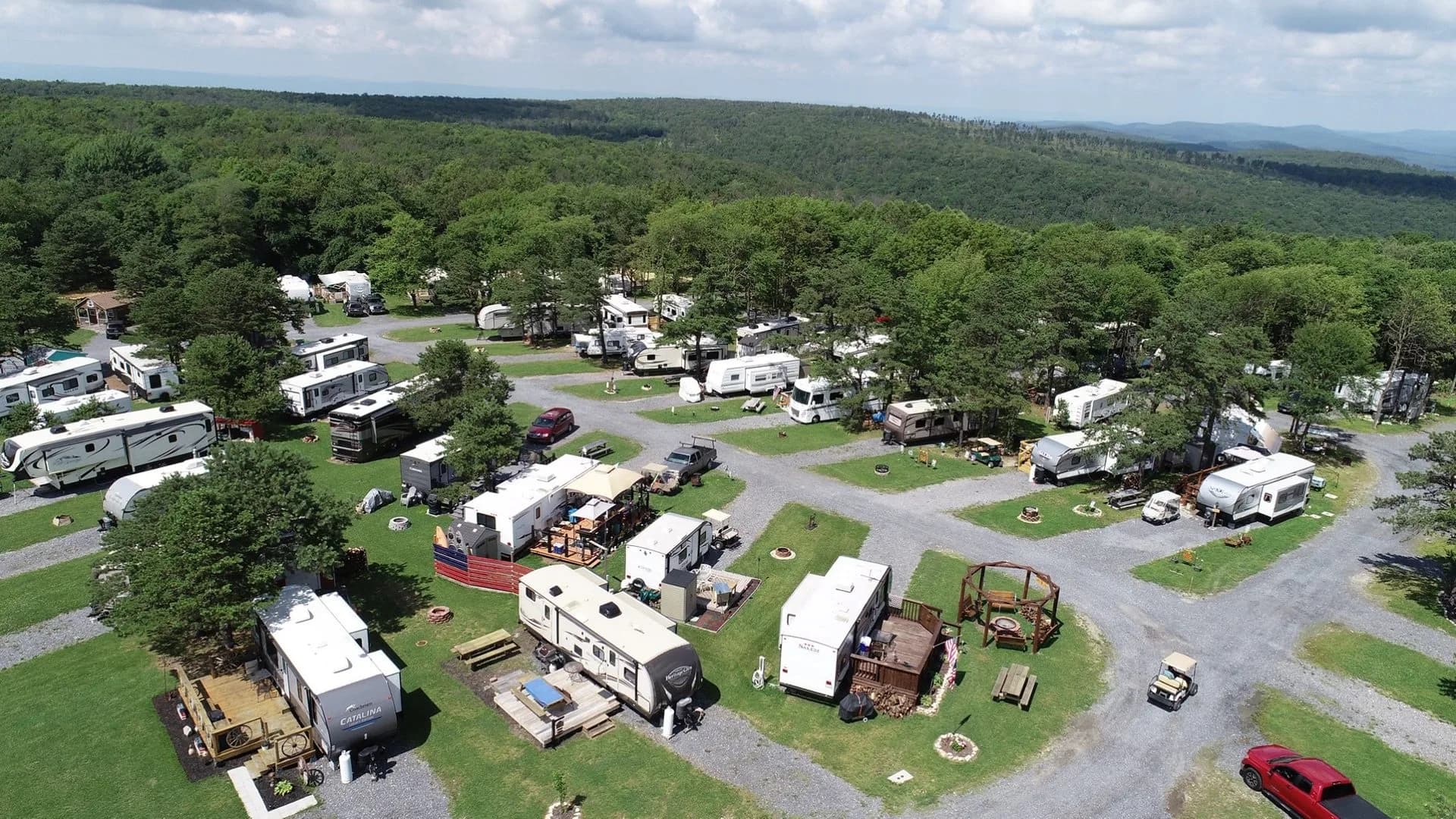
I run Pine Ridge Campground — 141 seasonal sites in the Pennsylvania mountains, 30 minutes from Gettysburg. So yes, I'm not a neutral party. But I'm going to give you the math straight, including the parts that make seasonal camping look bad. You can decide for yourself.
The dollar math: nightly vs. seasonal
Let's start with the comparison everyone makes first. How many weekend trips per year does it take to break even on a seasonal site?
Here's a real example I'll keep simple. Pretend you take 18 weekend trips per summer at nightly RV campgrounds.
Nightly camping (18 weekend trips/year): - Average full-hookup site rate: $60-$80/night - Average trip length: 2 nights (Fri-Sun) - Site cost: $1,800-$2,880/year - Reservation/booking fees: ~$5-10 per trip = $90-$180/year - Fuel for additional towing (driving to/from different campgrounds): roughly $400/year for the average rig and our regional distances - Wear on the RV from frequent setup/teardown (tires, slides, levelers): hard to itemize but real - Honest total: about $2,500-$3,800/year
Seasonal site (Pine Ridge example): - Site lease: $3,500-$4,500/year (the whole April-September season) - Metered electric: $50-$150/month depending on AC usage = $300-$900/year - Fuel: dramatically less, because your RV stops moving. You're just driving the tow vehicle out and back. - Wear: significantly less, because the rig isn't repeatedly being hitched, leveled, and unhitched. - Honest total: about $3,800-$5,400/year
On pure dollars, the seasonal site is roughly even with frequent weekend RVing, or slightly more expensive. So if dollars were the only thing that mattered, the case for seasonal would be "it costs about the same."
But that's not actually how anybody decides.
The cost nobody puts on a spreadsheet
Here's what the dollar math leaves out, and it's the part that makes most weekend warriors eventually switch.
The setup-teardown time. A reasonable estimate is 1.5-2 hours per weekend trip to fully set up your campsite (unhitching, leveling, slides out, awning, water/sewer/electric hookups, exterior items). Then another 1-1.5 hours to tear it all down Sunday afternoon. Across 18 weekend trips, that's 60-75 hours per year spent on setup and teardown. That's almost two work weeks worth of your vacation time spent on labor, not vacation.
A seasonal site eliminates that. The RV is already set up. You arrive, open the door, you're home.
The driving fatigue. Different campground every weekend means a different drive every weekend. New roads, new parking situation, new neighbors, new everything. By July, the trip itself becomes the reason you're tired when you get there. With a seasonal, the route is muscle memory. You barely notice the drive.
The reservation lottery. Every nightly camper knows this one. Summer weekends at any decent campground book up months in advance. You're either making reservations in January for July, or you're settling for whatever's left in late spring. With a seasonal site, the question "where are we going this weekend?" never gets asked. The answer is: home.
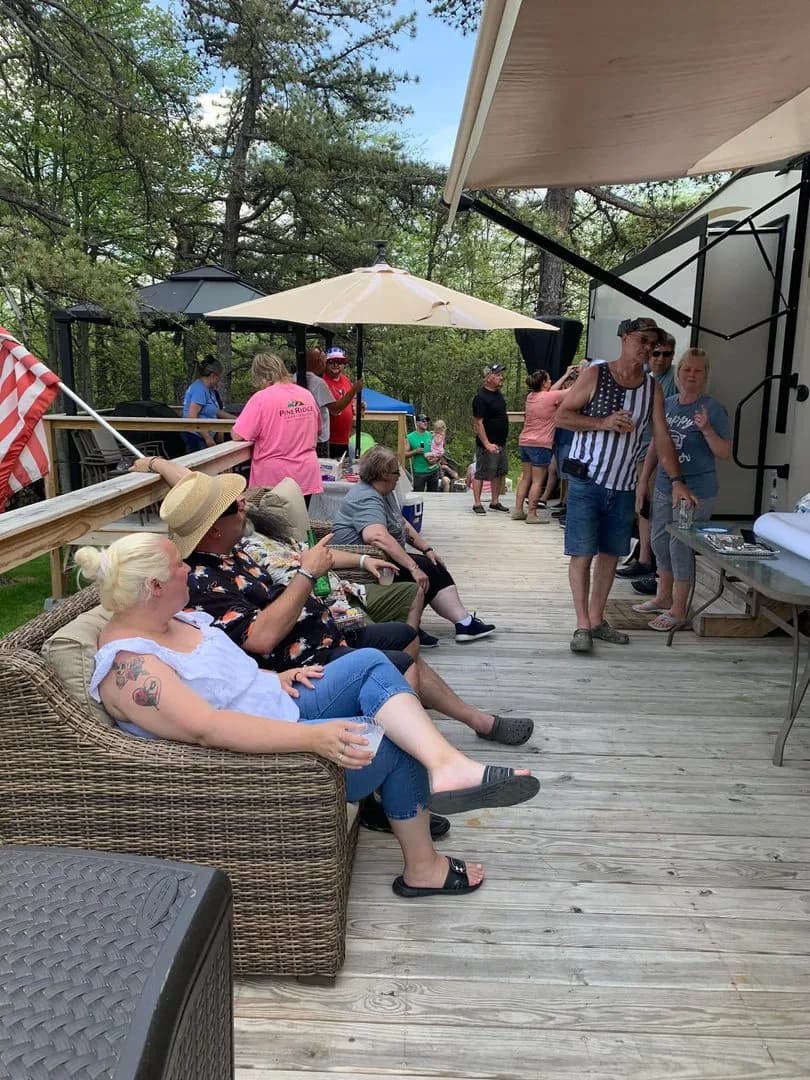
The friend network reset. This is the one most spreadsheets ignore but most seasonals talk about. When you camp in a different place every weekend, you meet new strangers every weekend. Maybe you exchange numbers. You almost never see them again. With a seasonal community, you spend 25 weekends a year with the same 141 families. Your kids have real summer friends. The couple two sites down knows your dog's name. There's a guy who'll loan you a wrench. That's not nothing — that's the whole point for a lot of people.
When seasonal camping is the wrong call
I'll be honest about who shouldn't sign a seasonal lease. There are three groups.
The light camper. If you genuinely only camp 4-6 weekends a year, the math doesn't work. $4,000 for the season divided across 5 weekends is $800 a weekend. You can get a nice cabin at a state park for less. Seasonal makes sense when you're using it 18-25 weekends a year, not 5.
The road-trip RVer. If your idea of RVing is exploring different parks every weekend — different states, different ecosystems, different experiences — seasonal isn't for you. The whole pitch is "you go to the same place every weekend." If that sounds boring, listen to your gut. It is, for some people.
The "we move every couple years" family. Seasonal makes the most sense when you can commit to a multi-year arrangement. If you're going to relocate for work, or your kids are about to age out of the RV-loving phase, or your situation is genuinely uncertain, take a year of nightly camping first and see how it feels.
The 3-question framework
If you're trying to figure out whether seasonal is right for you, here are the three questions that actually decide it.
1. Do you camp at least 15 weekends a year? Below that, the math gets too thin to recommend.
2. Do you want a permanent place, or do you want exploration? Both are legitimate camping styles. Be honest about which one you actually want, not the one that sounds more adventurous.
3. Does community matter to you? Some people RV for solitude, and that's great. Some people RV for connection, and the transient model never delivers that. Which one are you?
If your honest answers are "yes, permanent, and yes" — seasonal is probably right for you. If it's "no, exploration, and no" — keep doing nightly trips, and don't let anyone tell you you're missing out.
Where to look (and what to ask)
If you do decide seasonal is right for you, the next step is figuring out where. The Gettysburg / south-central PA area alone has a half-dozen seasonal campgrounds, ranging from corporate resort properties (Drummer Boy / Thousand Trails, where annual sites run upwards of $5,000 per month plus a required membership purchase) to small family-owned operations like Pine Ridge ($3,500-$4,500 per year, flat).
The single most important question to ask any seasonal campground before you sign: what's the TOTAL annual cost? Including any membership buy-in, any annual dues, any per-pet fees, any WiFi upcharges, any electric pass-through, any required deposits. Get every line item before you commit. Some campgrounds quote you a low "starting" rate that doubles when you factor in everything else. Others — and this should be the standard, in my opinion — quote you one number with nothing else attached.
A few other questions worth asking: - What's your renewal rate? (If existing seasonals are leaving, that tells you something.) - Can I tour and meet other seasonals before I sign? (At any decent campground the answer is yes, and they'll be glad you asked.) - What happens if my life changes mid-season? (Transfer policy, cancellation policy, sublet rules.) - Who answers the phone when I call with a problem on a Saturday night? (A different answer at a family-owned vs corporate operation.)
If you'd like to see how we do it, we're accepting 2027 applications and you can schedule a tour before committing to anything. Even if you decide Pine Ridge isn't your right fit, the tour conversation will probably help you figure out what kind of seasonal campground IS your fit.
Whatever you decide — seasonal, nightly, or somewhere in between — the math is yours to do. Just make sure you're counting all of it. The hours, the fatigue, the friendships. Those don't show up on a spreadsheet, but they're usually what decides it.
Continue Reading
More guides and tips for your camping journey

Start Your Seasonal Camping Journey
Pine Ridge Campground offers seasonal RV sites nestled in the beautiful Michaux State Forest, just 30 minutes from Gettysburg.