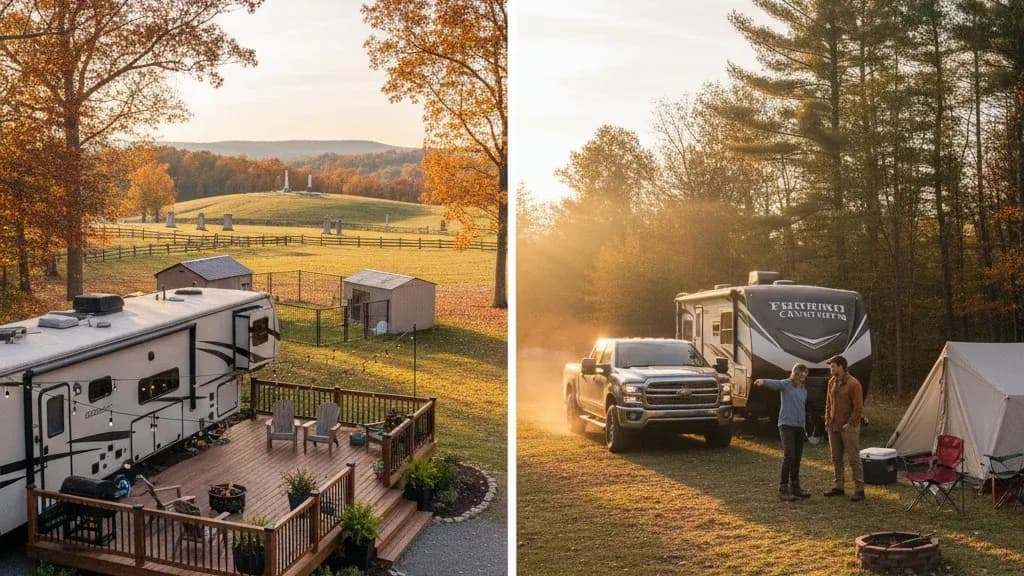
Seasonal vs Nightly Camping: Which Is Right for You?
Compare seasonal and nightly RV camping costs, lifestyle, and convenience. Calculate your break-even point and see why 30+ night campers go seasonal.

Owner, Pine Ridge Campground
Army veteran and entrepreneur who co-founded Pine Ridge Campground in 2017. With years of hands-on experience in seasonal RV camping and campground operations, Jamie shares practical insights for campers exploring Pennsylvania.
Waking up to the smell of damp pine needles and the distant tapping of a pileated woodpecker is one thing when you've spent three hours setting up a tent for a weekend; it's another thing entirely when you're stepping out of your permanent summer home with a hot cup of coffee, knowing your leveling jacks haven't moved in four months. Most RVers start their journey in the world of nightly "transient" camping, chasing the thrill of the open road and the variety of new horizons. But after a decade and a half of navigating tight back-in sites at 9:00 PM on a Friday and dealing with the "Sunday Scaries" of dumping tanks and hitching up, many of us start to look at those decorated, permanent-looking sites at the back of the park with a sense of envy.
Choosing between seasonal and nightly camping isn't just a logistical decision; it's a lifestyle pivot. Having spent 15 years in the Pennsylvania camping circuit—from the humid riverbanks of the Susquehanna to the crisp, high-elevation ridges of the Michaux State Forest—I've seen both sides of the coin. I've enjoyed the nomadic freedom of a cross-country trek, but I've also found the deep, soulful peace that only comes when you stop "camping" and start "living" in the woods.
The Reality of Seasonal vs Nightly Camping
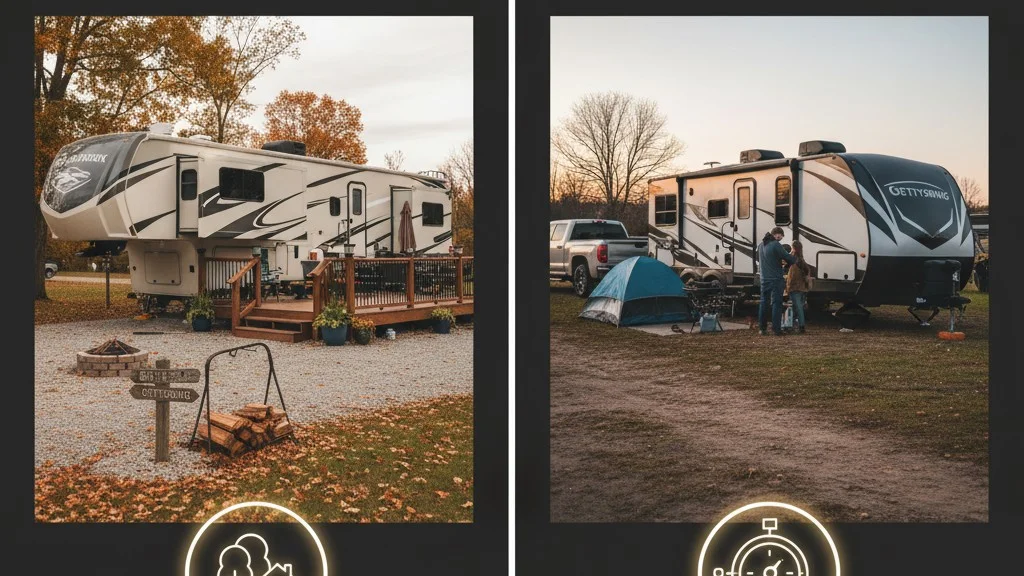
The fundamental difference between these two worlds comes down to the "set it and forget it" mentality versus the "adventure of the week." Nightly camping is built for the traveler. You are a guest in a space for a short window, usually arriving Friday afternoon and scurrying away by Sunday at noon. You pay a premium for that flexibility, often ranging from $60 to $120 per night depending on the amenities and the season.
Seasonal camping, on the other hand, is a long-term commitment to a specific community and a specific piece of dirt. At a park like Pine Ridge Campground, which is 100% seasonal, you aren't just renting a pad; you're securing a mountain retreat for the entire six-month window from April 1st to September 30th. You pay a flat fee upfront—typically between $3,500 and $4,500—which, when you do the math over 183 days, brings your nightly cost down to a fraction of the transient rate.
But the real difference isn't just the math; it's the physical experience. In nightly camping, your RV is a vehicle. In seasonal camping, your RV becomes a cottage. You can add a professional-grade deck, a shed for your gear, and a flower box that actually has time to bloom. You trade the stress of the highway for the stability of a second home.
Why This Choice Shapes Your Lifestyle
If you are a family with school-aged children or a retiree looking for a home base, this decision dictates how you spend your most precious resource: time. Think about the "Setup Tax." Every time you go nightly camping, you spend roughly two hours packing the house, an hour (or four) driving, and another hour leveling, hooking up water, and wrestling with the sewer hose. On Sunday, you do it all in reverse. If you camp ten weekends a year, you've spent 40 to 60 hours just on logistics.
In the seasonal world, that tax disappears. I remember the first year I went seasonal in the Pennsylvania mountains. I finished work on a Friday, drove 45 minutes with nothing but a bag of groceries and my dog, and was sitting by the fire with a cold drink within 15 minutes of arriving. My slides were already out, my water heater was already on, and my outdoor rug was already swept.
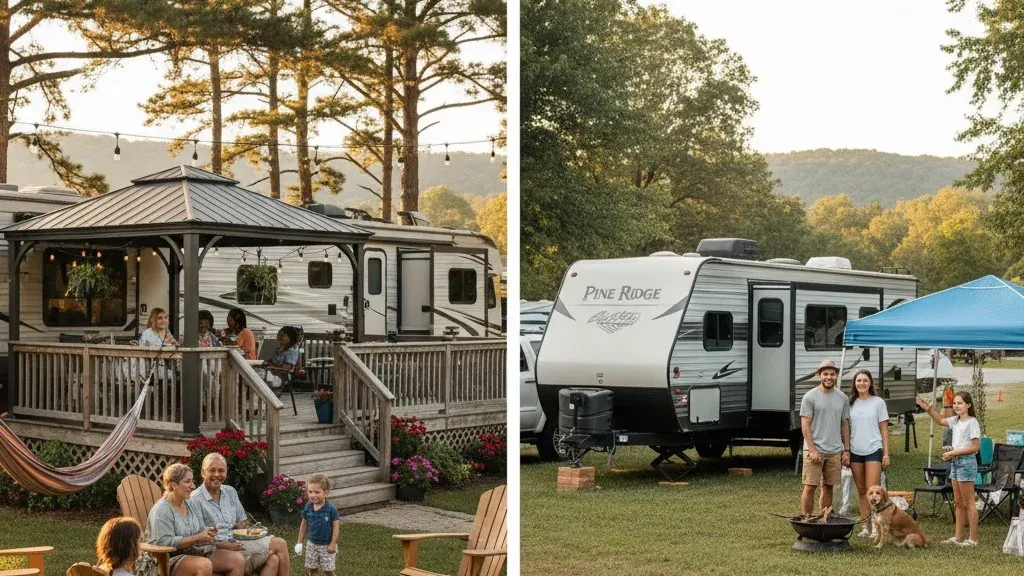
Furthermore, the social atmosphere is night and day. Nightly camping is like staying in a hotel; you might wave to your neighbor, but they'll be gone by morning. Seasonal camping is like living in a small town. At Pine Ridge, located at a cool 2,050 feet in elevation, the community is the heartbeat. You know who has the best advice on winterizing, who's heading to the Corn Crib Bar for a drink, and who is planning a group ride on the nearby ATV trails. You build friendships that last decades, not just a weekend.
Essential Facts for Informed Decisions
Before you sign a contract or book a dozen weekend trips, you need to understand the technical and financial realities of both options.
The Financial Breakdown - Nightly Rates: Expect to pay $1,500 to $2,500 for a summer's worth of weekend trips (assuming two weekends a month). This doesn't include the fuel costs of towing a 7,000-pound rig through the rolling hills of Adams County. - Seasonal Rates: A season at a high-quality park like Pine Ridge costs between $3,500 and $4,500. While the upfront cost is higher, you eliminate the "towing tax"—the massive fuel consumption of pulling an RV. Many seasonal campers save $500–$1,000 a year just on diesel or gas. - Utilities: In nightly camping, electric is usually included. In seasonal camping, you typically have your own meter and pay for what you use. This is actually a pro for many, as you aren't subsidizing the guy next door who runs three AC units 24/7.
Site Specifications and Hookups - Amperage: If you have a modern 5th wheel with two or three AC units, you need 50-amp service. Many older nightly parks only offer 30-amp, which means you'll be tripping breakers all weekend. Seasonal-only parks, like Pine Ridge, are often better equipped with modern full-hookup sites (20/30/50 amp) because they are designed for long-term residency. - Connectivity: Nightly parks often have spotty "free" WiFi that dies the moment the park hits 50% capacity. Because seasonal campers demand better, some parks have invested in Fiber WiFi, allowing you to work remotely from the forest or stream movies without the dreaded buffering wheel.
The Location Factor In Pennsylvania, location is everything. Nightly camping allows you to see the sights—one weekend in the Poconos, one in Lancaster, one in Gettysburg. But seasonal camping allows you to own a region. Being 30 minutes from Gettysburg means you can visit the battlefield on a random Tuesday when the crowds are gone, or hit the local wineries in Biglerville without feeling rushed to get back to the hitch.
Pro Tips for Seasonal Success
If you're leaning toward the seasonal life, there are "insider" details that only years of experience can teach you.
- The "Sun and Shade" Balance: When picking a permanent site, look at the trees during the afternoon. A site that looks beautiful and sunny at 10:00 AM might turn your RV into an oven by 4:00 PM. In the Michaux State Forest area, we love our trees, but you want a site that offers a mix of morning light and afternoon shade to save on your electric bill.
- Inspect the Pad: Since you won't be moving, the "settling" of your rig matters. Look for well-maintained, level sites. If the ground is soft, you'll be re-leveling your rig every three weeks after a heavy rain.
- The Winterization Plan: Remember that seasonal camping in PA usually ends in late September. You need a plan for your rig during the off-season. Does the park allow on-site storage? (Pine Ridge does, which is a massive convenience). This saves you the hassle of hauling the rig to a storage facility in the winter.
- Community Vibe Check: Before committing to a season, visit the park on a Saturday afternoon. Is it a party atmosphere or a quiet retreat? For those of us who appreciate the serenity of the woods, a 100% seasonal park is often quieter than a transient park because there isn't a constant influx of new people who treat the weekend like a frat party.
- Critter Management: In the forest, you are a guest of the local wildlife. Seasonal campers know the "soap trick" (using Irish Spring to deter mice) and the importance of keeping a clean perimeter to avoid attracting black bears or raccoons.
How Pine Ridge Fits Your Search
If you find yourself searching for "camping near Gettysburg" but you're tired of the crowded, commercialized "resorts" where you're packed in like sardines, Pine Ridge Campground offers a distinct alternative. It is not a place for "overnighters." By being 100% seasonal, the park fosters a unique environment that feels more like a private club than a campground.
Located at 2635 Shippensburg Rd in Biglerville, it sits at an elevation that keeps it several degrees cooler than the valley—a godsend in July. Since 2017, the family ownership has focused on upgrading the infrastructure that seasonal campers actually care about: a pool for those crisp mountain mornings, a pavilion for community gatherings, and the Corn Crib Bar, which serves as the social hub.
Because there are no nightly rentals, there is no "Friday night rush" of people who don't know the rules or where to park. You have 141 neighbors who all care about the property as much as you do. Whether you're an avid hiker looking for easy access to the Appalachian Trail or an ATV enthusiast who wants to be five minutes from the state forest trails, the stability of a seasonal site here provides a home base that a weekend trip simply can't match.
Getting Started with Your Seasonal Journey
Transitioning from a nightly traveler to a seasonal resident is a big step, but it's one that most campers wish they had taken sooner. The first step isn't buying a new rig; it's finding the right "dirt." You should look for a park that aligns with your values—whether that's family-friendly activities, quiet forest immersion, or proximity to historical sites like Gettysburg.
Keep in mind that the best seasonal sites in Pennsylvania often have waiting lists, so the best time to start looking for next year is right now. Don't be afraid to ask the tough questions: What are the guest policies? Is there a surcharge for 50-amp service? How is the water pressure? A transparent, family-owned park will have no problem giving you straight answers.
If you're ready to trade the stress of the highway for the peace of the Michaux State Forest, we invite you to see what life is like when you stop moving and start staying. At Pine Ridge, we've built a community specifically for those who love the RV lifestyle but want a permanent place to hang their hat. From our fiber-optic internet that keeps you connected to the mountain air that helps you disconnect, we offer the best of both worlds. We would love to show you around our 141 sites and help you find your perfect summer home. Visit our website to learn more about our community and apply for a seasonal site today.
Continue Reading
More guides and tips for your camping journey
Start Your Seasonal Camping Journey
Pine Ridge Campground offers seasonal RV sites nestled in the beautiful Michaux State Forest, just 30 minutes from Gettysburg.