Everything You Need to Know About Appalachian Trail Camping Base Camp
Discover why appalachian trail camping base camp is worth exploring and what makes it special for campers.

Owner, Pine Ridge Campground
Army veteran and entrepreneur who co-founded Pine Ridge Campground in 2017. With years of hands-on experience in seasonal RV camping and campground operations, Jamie shares practical insights for campers exploring Pennsylvania.
Finding a level spot to pitch a tent on a rocky ridge in the middle of a thunderstorm is a rite of passage every backpacker remembers, but for those of us who have spent decades in the woods, there comes a time when you want the trail without the physical toll of a thin foam pad. You want the smell of the damp hemlocks and the misty morning views of the Cumberland Valley, but you also want a hot shower and a real mattress at the end of the day. This is where the concept of an Appalachian Trail (AT) base camp changes the game—allowing you to conquer the "Green Tunnel" in manageable sections while maintaining a home base that doesn't require filtering water from a mud puddle.
Defining the AT Base Camp Experience
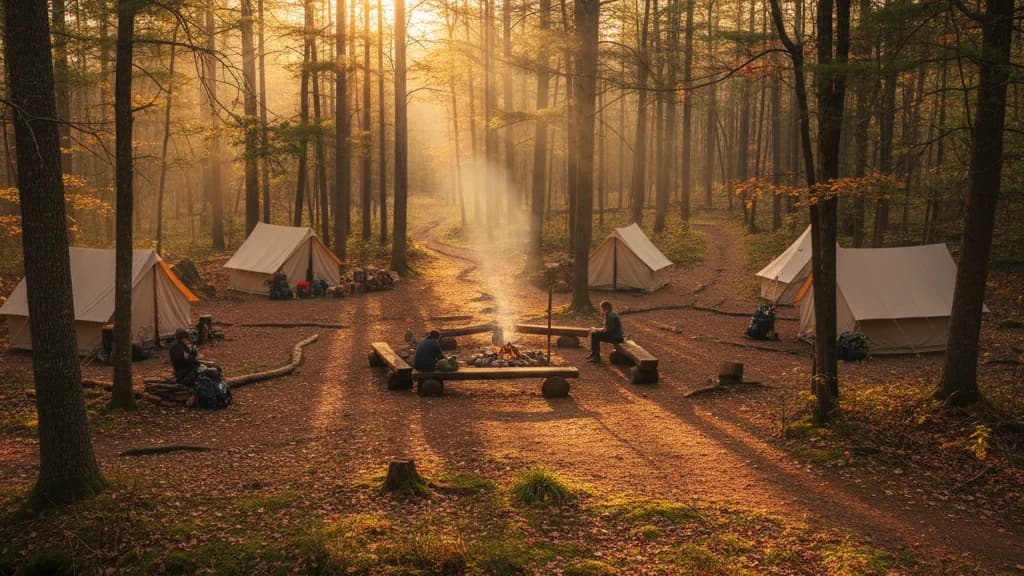
An Appalachian Trail camping base camp is a strategic approach to exploring the nation’s most famous long-distance footpath. Instead of carrying 35 pounds of gear on your back and sleeping in crowded three-sided shelters, you establish a semi-permanent or seasonal headquarters at a nearby campground. From here, you "slackpack" or day-hike specific sections of the trail, returning each evening to the comforts of your RV.
In Pennsylvania, specifically within the Michaux State Forest, this strategy is particularly effective. The AT meanders through this region for about 37 miles, offering some of the most varied terrain in the state. By setting up a base camp, you aren't limited by how much food you can carry or how far you can walk before sunset. You can wait out the humid PA summer rainstorms in a dry cabin or RV, then hit the trail the moment the sun breaks through the canopy.
As someone who has spent fifteen years navigating these woods, I can tell you that the "base camp" method is the secret to actually enjoying the trail. You get to see the sunset from the 2,000-foot peaks of the South Mountain range, but you’re back at your site in time to throw a steak on the grill and relax in a camp chair. It transforms a grueling endurance test into a sustainable outdoor lifestyle.
Why This Matters for Campers
For the seasonal camper, the Appalachian Trail isn't just a line on a map; it’s a neighbors-only backyard. When you commit to a full season in one spot, your relationship with the trail changes. You start to notice the subtle shifts—the way the mountain laurel blooms in late spring near the Appalachian Trail crossings, or how the air cools significantly as you climb toward the higher elevations of Michaux.
Logistics are the biggest hurdle for any hiker. If you’re a transient camper, you’re constantly worrying about check-out times and finding the next available hookup. A seasonal base camp eliminates that stress. You can leave your heavy gear, your fishing tackle, and your extra supplies in your RV. When Saturday morning rolls around, you just grab a day pack and go.
Furthermore, the section of the AT that runs through Southern Pennsylvania is home to the "Halfway Point." This is a psychological milestone for thru-hikers, but for base campers, it’s a cultural hub. Being near the Appalachian Trail Museum means you are at the heart of hiking history. You aren't just visiting; you're part of the trail community. You’ll meet the "NOBOs" (Northbounders) coming through in June and July, full of stories from Georgia, and you can offer them the kind of trail magic that only someone with a fully stocked fridge can provide.
Key Information and Facts
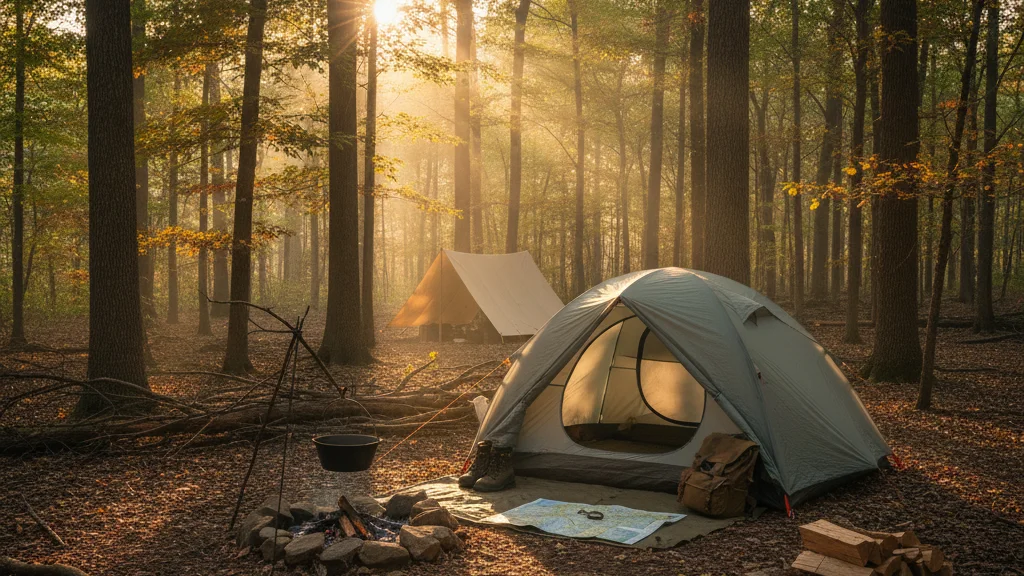
To successfully run a base camp, you need to understand the geography of the South Mountain region. The trail here is known for being "rocky" (it is Pennsylvania, after all), but the sections near the Maryland border and through Michaux are actually some of the most pleasant stretches of the entire 2,190-mile journey.
- Elevation and Climate: In the mountains near Biglerville, you’re living at over 2,000 feet. This means temperatures are often 5 to 10 degrees cooler than in nearby Gettysburg. This is a massive advantage in July when the valley floor is sweltering.
- The Midway Point: Located inside Pine Grove Furnace State Park, the midpoint of the AT is a must-visit. It’s also where the famous "Half-Gallon Challenge" takes place, where thru-hikers attempt to eat a half-gallon of ice cream in one sitting.
- Access Points: There are numerous road crossings where you can park a vehicle to begin your day hike. Key spots include Pen Mar, Caledonia State Park, and various forest road crossings within Michaux.
- Trail Difficulty: This section is rated as moderate. You’ll encounter "The Maze," a jumble of boulders that requires some agility, but you’ll also find long, flat stretches of pine-needle-covered paths that feel like walking on a carpet.
- State Forest Regulations: Michaux is a working forest. This means while you have incredible access to hiking, you also share the land with those enjoying ATV & off-road trails and hunting seasons. Understanding the calendar is vital for safety and enjoyment.
Tips and Best Practices
After a decade and a half of seasonal camping, I’ve learned that a successful base camp requires more than just a good pair of boots. It requires a system.
1. The Two-Vehicle Shuffle If you’re camping with a partner or friends, the two-vehicle shuffle is your best friend. Drop one car at your finish point (like a trail crossing on Shippensburg Road) and drive the other to your starting point. This allows you to hike a linear 8-mile section without having to double back.
2. Gear Maintenance at Base One of the biggest perks of a base camp is the ability to dry out gear. Pennsylvania humidity is legendary. Use your seasonal site to properly air out your boots and packs. At Pine Ridge Campground, having a heated pool to soak your sore muscles in after a 10-mile trek is a luxury you won't find at a backcountry lean-to.
3. Seasonal Timing Don't rush the season. April on the ridge can still see snow flurries, and the "leaf-out" doesn't fully happen until May. However, October is the crown jewel. The oak and hickory forests turn brilliant shades of gold and orange. If you’re base camping, plan your hardest hikes for the crisp mornings of late September.
4. Safety and Wildlife You are in black bear country. While they are generally shy, keeping a clean "base camp" is essential. Don't leave trash or food outside your RV overnight. Also, be mindful of timber rattlesnakes on the rocky outcroppings. They love to sun themselves on the same vistas you’re trying to photograph. Stay on the trail, and they’ll leave you alone.
5. Diversify Your Days The beauty of a base camp is that you don't have to hike every day. If your knees are barking, take a day off for wine touring in the local orchards or head into Carlisle for some antiquing. The trail will be there tomorrow.
How Pine Ridge Fits In
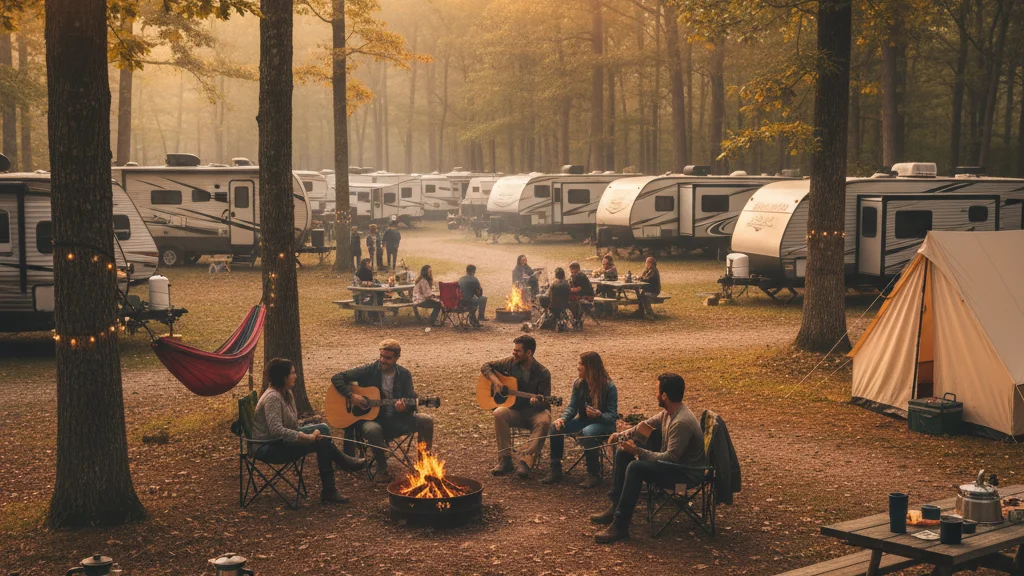
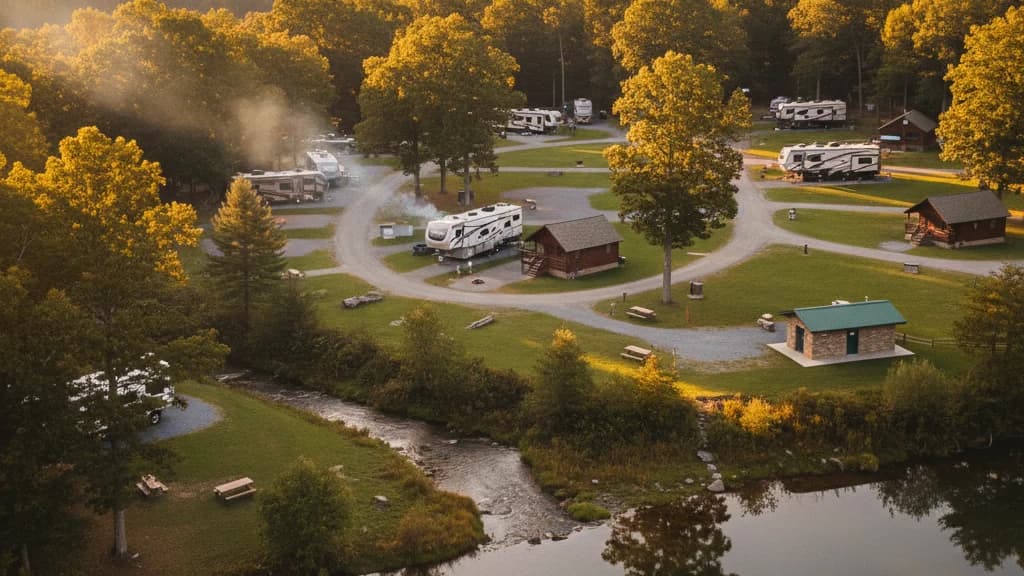
Pine Ridge Campground is uniquely positioned to serve as the ultimate Appalachian Trail base camp. Located at 2,050 feet in the heart of Michaux State Forest, we are quite literally on top of the action. We aren't a transient park where people are constantly coming and going; we are a 100% seasonal community. This means when you return from a day on the AT, you’re coming home to friends who know your name and want to hear about your hike.
Our location on Shippensburg Road puts you just minutes away from multiple AT access points. You can spend your morning trekking through the silent, deep woods of the state forest and your afternoon enjoying a cold drink at our Corn Crib Bar. For those who need to stay connected—perhaps to download trail maps or check weather radars—our fiber WiFi ensures you aren't left in the dark, even though you’re deep in the mountains.
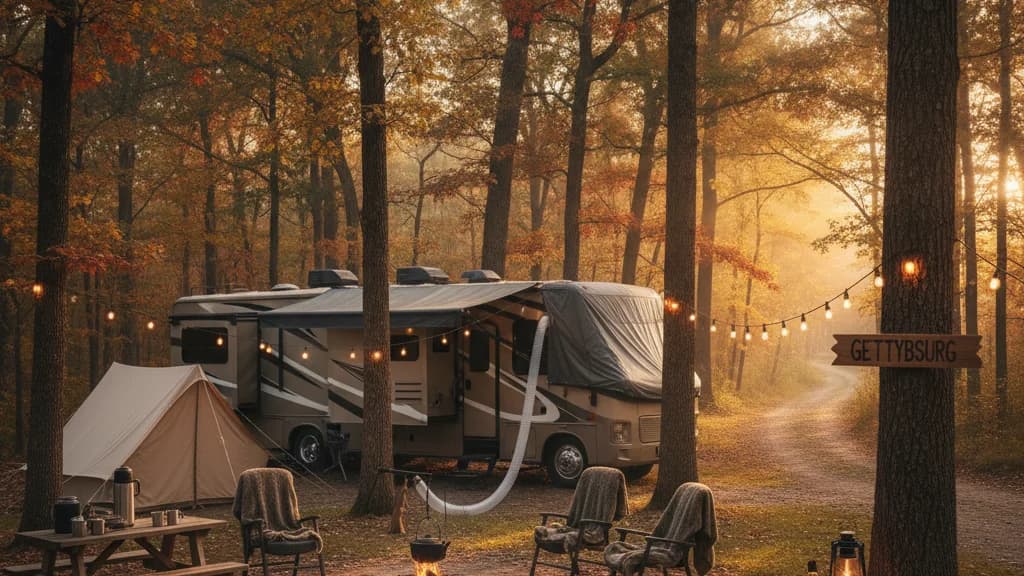
We’ve designed Pine Ridge to be a sanctuary for those who love the outdoors but appreciate modern comforts. After a long day of elevation gain and loss, there is nothing quite like coming back to a full-hookup site, a level gravel pad, and a community of fellow campers who share your passion for the Pennsylvania wilds.
Getting Started
If you’re tired of the "weekend warrior" grind—loading the truck, driving three hours, setting up, and then tearing it all down 48 hours later—it’s time to consider a more permanent solution. Starting an AT base camp begins with finding the right site. You want a place that feels remote enough to hear the owls at night but developed enough to provide the amenities that make life easy.
First, visit the area. Spend some time in Michaux. Walk the section of the Appalachian Trail that runs from Pen Mar to Pine Grove Furnace. See if the "mountain life" resonates with you. Check out the local amenities, from the fly fishing streams to the nearby historic sites of Gettysburg.
Second, evaluate your RV setup. A seasonal site is a commitment, and you’ll want to ensure your rig is ready for a 7-month stay. Think about things like sun exposure (for your awning) and proximity to the bathhouse or pool.
Finally, join a community. Seasonal camping is as much about the people as it is about the place. At Pine Ridge, we pride ourselves on being a family-owned, tight-knit group. We aren't a corporate-run parking lot; we are a mountain retreat. When you establish your base camp here, you aren't just getting a gravel pad—you're getting a front-row seat to the best hiking in Pennsylvania.
The Appalachian Trail is a massive, daunting entity when viewed as a whole. But when you break it down, mile by mile, from the comfort of a seasonal base camp, it becomes a lifelong companion. You’ll learn the curves of the hills, the hidden springs, and the best places to sit and watch the fog roll through the valleys. Experience teaches us that the best way to enjoy the journey is to have a reliable place to rest your head at the end of the trail.
If you’re ready to stop dreaming about the trail and start living on it, we invite you to join our community. Our seasonal sites offer the perfect balance of rugged mountain access and modern RV luxury, providing you with a consistent home base from April through October. Space in our 141-site park is limited and highly sought after by those who know the value of a Michaux State Forest location. Don’t spend another season wishing you were closer to the pines. Take the first step toward your mountain lifestyle today and explore our seasonal sites or apply for a seasonal site to secure your spot in the heart of the Pennsylvania mountains.
Research sources: The Appalachian Trail emerged from a visionary concept proposed by Benton MacKaye, a forester and planner who published "An Appalachian Trail: A Project in Regional Planning" in 1921[21]. MacKaye's vision encompassed more than merely creating a hiking route; he envisioned establishing a wilderness footpath that would serve as "a place for recreation, reflection, and renewal in a rapidly industrializing nation," offering Americans opportunity to reconnect with nature and experience what he termed "fellowship with the wilderness"[21]. By 1925, volunteers and outdoor clubs embraced MacKaye's vision, formally establishing the Appalachian Trail Conference—now known as the Appalachian Trail Conservancy—to coordinate construction and management of this ambitious project[21]. Remarkably, the trail was completed to its full length by 1937, despite primitive construction methods and challenging terrain[21]. The completed trail transformed from a rustic pathway into an internationally recognized symbol of wilderness access and American outdoor heritage.; Today, the Appalachian Trail maintains its position as the longest hiking-only footpath in the world, spanning 2,197.9 miles and representing a hiking achievement equivalent to ascending Mount Everest sixteen times over when accounting for cumulative elevation gain and loss of 464,500 feet[19][22]. More than three million people visit portions of the trail annually, while over 3,000 individuals attempt thru-hiking each year[19]. The trail traverses remarkably diverse terrain and ecosystems, passing through lands managed by multiple federal agencies including the National Park Service, U.S. Forest Service, and state land management authorities, as well as private landholdings, creating what the Appalachian Trail Conservancy describes as a unique "Cooperative Management System" involving more than seventy-five different managing agencies[37][19].; Pennsylvania holds particular significance within the Appalachian Trail network, claiming approximately 229 miles of the trail's total length—roughly ten percent of the entire route—making Pennsylvania the fifth-longest state section after Virginia, North Carolina, Maine, and Tennessee[17][21]. Pennsylvania's section, colloquially termed "Rocksylvania" due to its notably rocky terrain particularly on the long, flat ridges north of the Susquehanna River, offers distinctive hiking experiences ranging from relatively gentle terrain in the Cumberland Valley to challenging rocky passages in northern sections[17]. The southern Pennsylvania portion near Gettysburg passes through Michaux State Forest and includes Pine Grove Furnace State Park, which marks the official halfway point of the entire Appalachian Trail[21].
Interested in seasonal camping at Pine Ridge? View our seasonal sites or submit your application to get started.
Continue Reading
More guides and tips for your camping journey
Start Your Seasonal Camping Journey
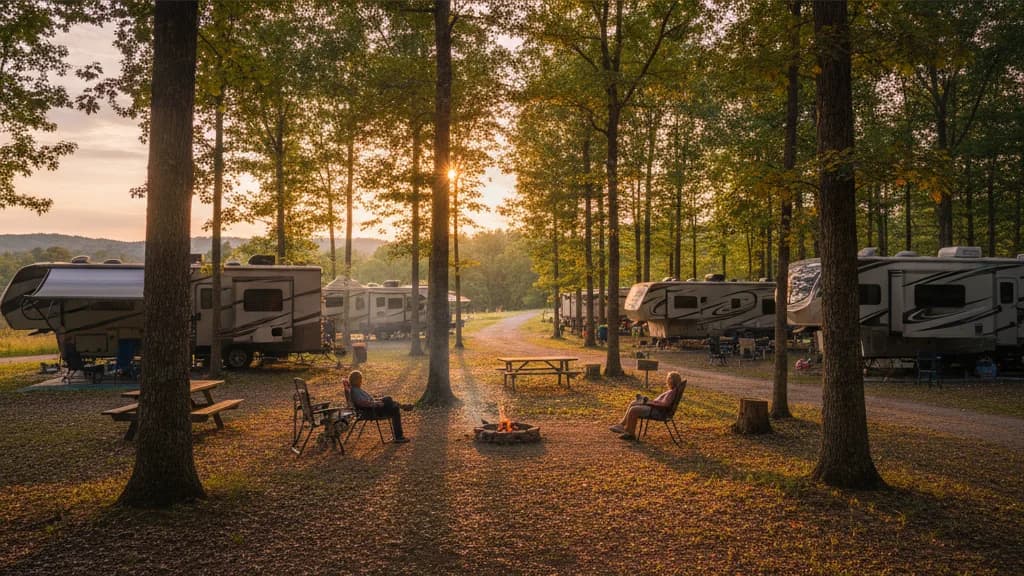
Pine Ridge Campground offers seasonal RV sites nestled in the beautiful Michaux State Forest, just 30 minutes from Gettysburg.