RV Electrical Hookups: 30 vs 50 Amp Service Explained
Master RV electrical hookups with our guide to 30-amp vs 50-amp service. Learn power management, surge protection, and avoid common mistakes that damage your rig.

Owner, Pine Ridge Campground
Army veteran and entrepreneur who co-founded Pine Ridge Campground in 2017. With years of hands-on experience in seasonal RV camping and campground operations, Jamie shares practical insights for campers exploring Pennsylvania.
Staring at a power pedestal in the pouring rain while trying to figure out why your microwave just tripped the main breaker is a rite of passage no RVer actually wants to experience. After fifteen years of setting up seasonal sites across Pennsylvania, I've learned that the "hum" of a happy camper is actually the quiet vibration of a properly managed electrical system. Whether you are parked under the towering oaks of the Michaux State Forest or prepping for a summer near the historic battlefields of Gettysburg, understanding the dance between 30-amp and 50-amp service is the difference between a relaxing weekend and a frustrating afternoon spent resetting breakers in the dark.
Understanding 30 and 50 Amp Basics
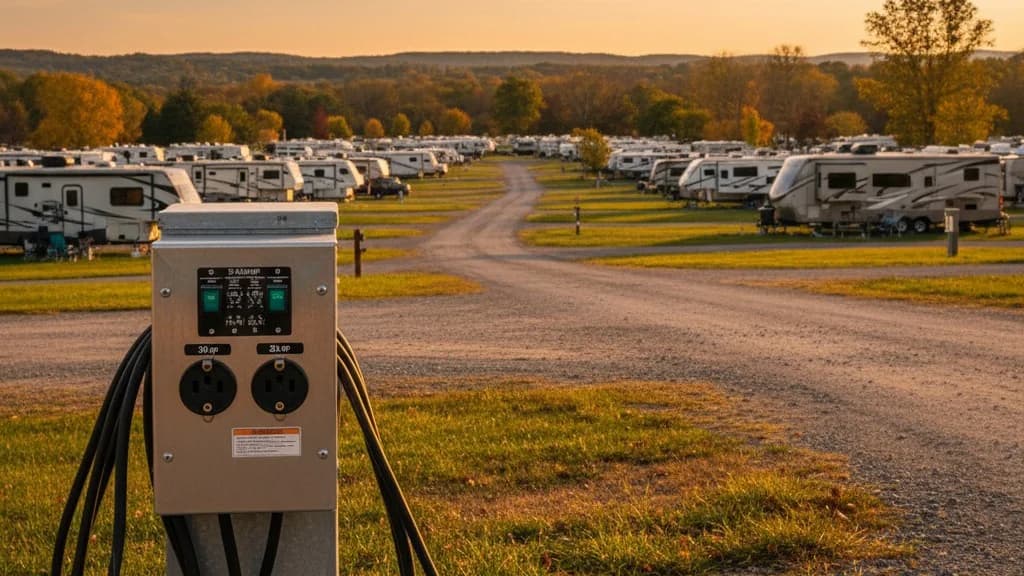
When we talk about RV electrical hookups, we are essentially discussing the "pipe size" of the electricity flowing into your rig. A 30-amp service uses a three-prong plug (one hot, one neutral, and one ground) and provides 120 volts. In technical terms, that gives you a total of 3,600 watts of power to play with. This is standard for most travel trailers and smaller fifth wheels.
On the other hand, a 50-amp service is a different beast entirely. It uses a four-prong plug (two hot wires, one neutral, and one ground). Many people assume 50-amp service is just "a little bit more" than 30-amp, but the math tells a different story. Because 50-amp service provides two separate 50-amp 120-volt legs, you actually have a total capacity of 12,000 watts. That is more than three times the power of a 30-amp site.
At Pine Ridge Campground, we've designed our 141 seasonal sites to accommodate both, offering 20/30/50 amp service at every pedestal. Having that 50-amp capability is a game-changer when the Pennsylvania humidity spikes in July and you need to run two air conditioners simultaneously while the kids are watching a movie and the water heater is recovering.
Why Electrical Knowledge Saves Your Trip
Why does this technical jargon matter when you just want to sit by the fire? Because your RV's appliances are "power hungry," and they don't always play nice together. In a 30-amp rig, you have to prioritize. You can run the AC, but you probably shouldn't start the microwave and the electric hair dryer at the same time. If you do, you'll likely hear that dreaded clunk of the pedestal breaker.
Over my years of seasonal camping, I've seen many neighbors struggle with "low voltage" issues during peak holiday weekends. When every camper in the park has their AC cranked to the max, the voltage in the entire park can dip. If your voltage drops below 105-108 volts, it can actually cause permanent damage to your AC compressor or your refrigerator's control board. This is why understanding your hookup is about more than just "turning things on"—it's about protecting your investment.
Furthermore, seasonal camping is a marathon, not a sprint. At a place like Pine Ridge, where the season runs from April through September, your electrical system is working for six months straight. Understanding how to balanced your load ensures that you aren't putting undue stress on your RV's converter or the campground's infrastructure. It's about peace of mind so you can focus on the important stuff, like which winery to visit in Biglerville or when to hit the ATV trails.
Essential Facts for RV Electrical Safety
To master your RV hookup, you need to know the specific limitations and requirements of your equipment. Here are the hard facts every seasonal camper should have memorized:
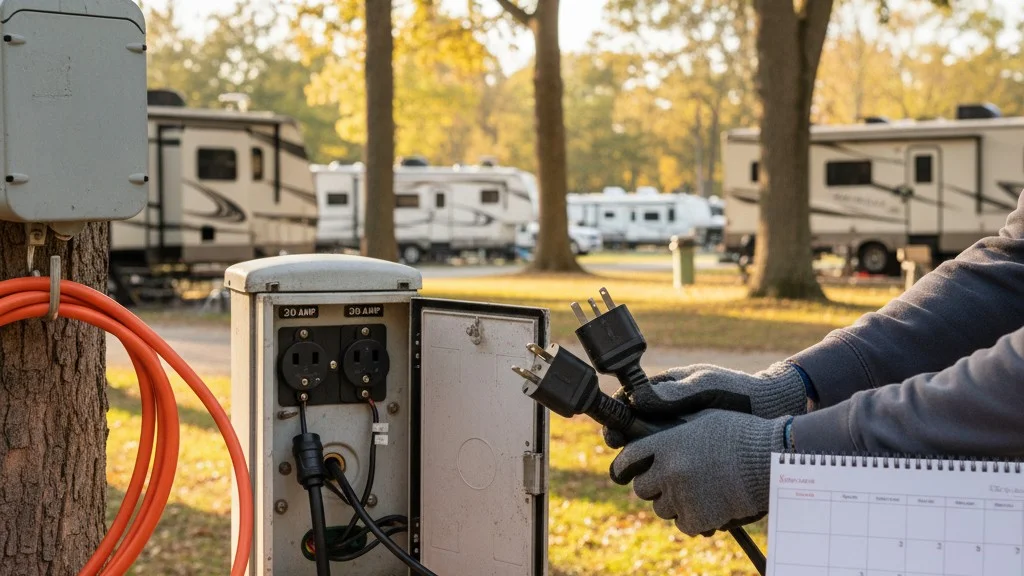
- The Adapter Rule: You can "plug down," but you can't "power up." You can use a "dogbone" adapter to plug a 30-amp RV into a 50-amp pedestal safely (the RV will only draw what it needs). However, if you plug a 50-amp RV into a 30-amp pedestal, you are limited to 3,600 watts and will likely trip breakers if you try to run multiple heavy appliances.
- The 80% Rule: For long-term seasonal use, it is best practice not to exceed 80% of your breaker's capacity for extended periods. On a 30-amp circuit, try to keep your continuous draw under 24 amps.
- Surge Protectors vs. EMS: A basic surge protector only protects against high-voltage spikes (like lightning). A true EMS (Electrical Management System) protects against high/low voltage, open neutrals, and reverse polarity. For a seasonal site at 2,050 feet in the mountains, where summer storms can roll through Michaux State Forest quickly, an EMS is non-negotiable.
- Wire Gauge Matters: If you are using an extension cord (which I generally advise against for seasonal setups), it must be the correct gauge. A standard orange household extension cord will melt if you try to run an RV AC through it. Always use heavy-duty, RV-rated cords.
I remember a season back in the early 2010s when a neighbor tried to run their 30-amp rig off a 100-foot light-duty extension cord because they didn't like where the pedestal was located. By mid-July, the plug had literally fused to the cord. It's a dangerous mistake that is easily avoided with the right gear.
Pro Tips for Seasonal Electrical Management
After a decade and a half of living the seasonal life, I've picked up a few tricks that aren't in the owner's manual.
1. The "Contact Cleaner" Ritual Every April 1st, when the season opens at Pine Ridge, the first thing I do is inspect my power cord prongs. Over the winter, even in a sealed storage compartment, prongs can develop a thin layer of oxidation. I use a fine-grit sandpaper or a dedicated electrical contact cleaner to ensure they are shiny. A "dirty" connection creates resistance, and resistance creates heat. Heat is what melts plugs.
2. Manage Your Water Heater Most modern RV water heaters have both a gas and an electric switch. When you are on a 30-amp site, switch your water heater to propane during the morning rush. This frees up about 10-12 amps of electricity for the coffee maker and the toaster. Once breakfast is over, you can flip it back to electric to save your propane.
3. Invest in a Digital Voltmeter I keep a small digital voltmeter plugged into an outlet inside my RV that is easily visible. It gives me a real-time readout of the park's voltage. If I see it dipping toward 110V on a hot Saturday afternoon, I know it's time to shut off the extra fridge or switch the water heater to gas.
4. Check Your Pedestal Connection When you plug in, make sure the connection is tight. If the plug feels "loose" in the pedestal socket, that's a recipe for an electrical arc. At family-owned campgrounds like Pine Ridge, the owners take pride in maintenance, so if you ever feel a connection is loose, just let the team know. It's a five-minute fix that prevents a major headache.
Electrical Life at Pine Ridge Campground
One of the reasons I appreciate the setup at Pine Ridge Campground is the reliability of the infrastructure. Located at an elevation of 2,050 feet, we are often "above" some of the thickest heat of the valley, but we still rely heavily on our electrical systems.
Unlike older parks that might have "daisy-chained" electrical lines where one person's AC usage affects the neighbor's voltage, Pine Ridge offers modern, full-hookup sites with 20/30/50 amp service. This is critical for the modern seasonal camper who might be working remotely using the campground's Fiber WiFi. There is nothing worse than having your router reset in the middle of a Zoom call because the voltage dropped.
Being tucked into the Michaux State Forest means we are surrounded by nature, but we aren't "roughing it" electrically. Whether you're returning from a dusty afternoon on the nearby ATV trails or a long hike on the Appalachian Trail, you want to know that when you flip the switch, the lights come on and the AC hums to life. The peace of mind that comes from a stable, high-capacity electrical hookup allows you to actually enjoy the scenery rather than troubleshooting your breaker box.
Getting Started With Your Hookup
If you are new to the seasonal world or just upgraded to a larger rig, your first step is to verify your RV's requirements. Look at your power cord: three prongs means 30-amp, four prongs means 50-amp.
Next, gather your "Electrical Kit." This should include: - A high-quality EMS (portable or hardwired). - A 50-to-30 amp dogbone adapter (even if you have a 50-amp rig, you might visit a friend at a 30-amp site). - A 30-to-15 amp adapter (for plugging in at home to pre-chill the fridge). - Electrical contact cleaner.
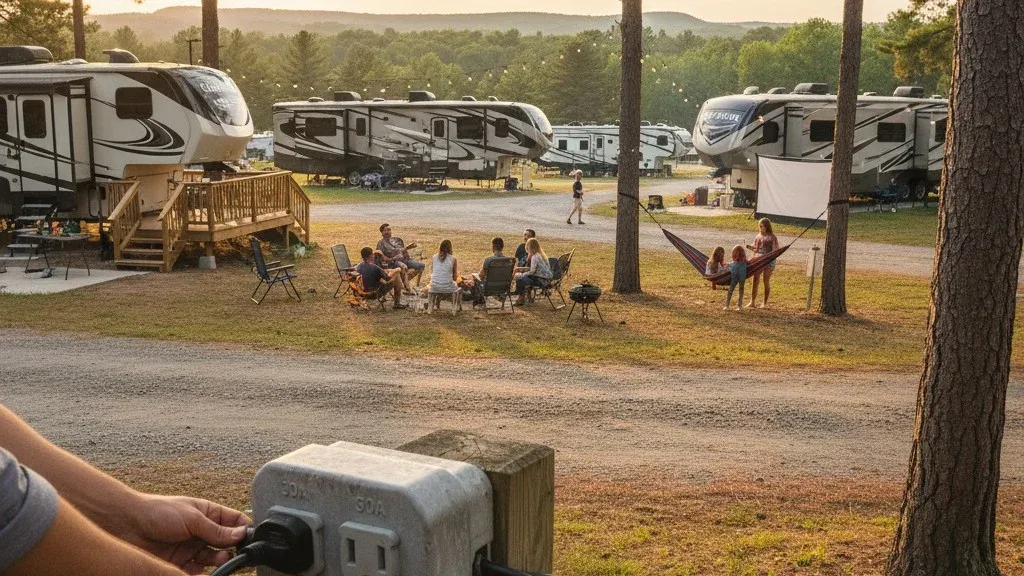
When you arrive at your seasonal site for the first time, ensure the pedestal breaker is in the OFF position before plugging in your cord. Once the cord is seated firmly, flip the breaker on. This prevents "arcing," which can pit the metal on your prongs and lead to failure down the road.
If you're looking for a place where the mountain air is cool and the power is steady, Pine Ridge Campground offers the perfect seasonal escape. With 141 full-hookup sites and a community that feels like family, it's the ideal spot to park your rig for the six-month season. Our family-owned atmosphere means we care about the details—from the pool to the strength of the electrical grid.
Ready to claim your spot in the mountains and join a community of experienced campers? We would love to welcome you to the Pine Ridge family for the upcoming season. To learn more about our site availability, amenities, and how you can spend your summers just minutes from the Appalachian Trail and historic Gettysburg, visit our website to apply for a seasonal site and start your next adventure.
Ready to experience seasonal camping at Pine Ridge? Apply for a seasonal site or learn more about seasonal camping at our family-owned campground near Gettysburg.
Continue Reading
More guides and tips for your camping journey
Start Your Seasonal Camping Journey
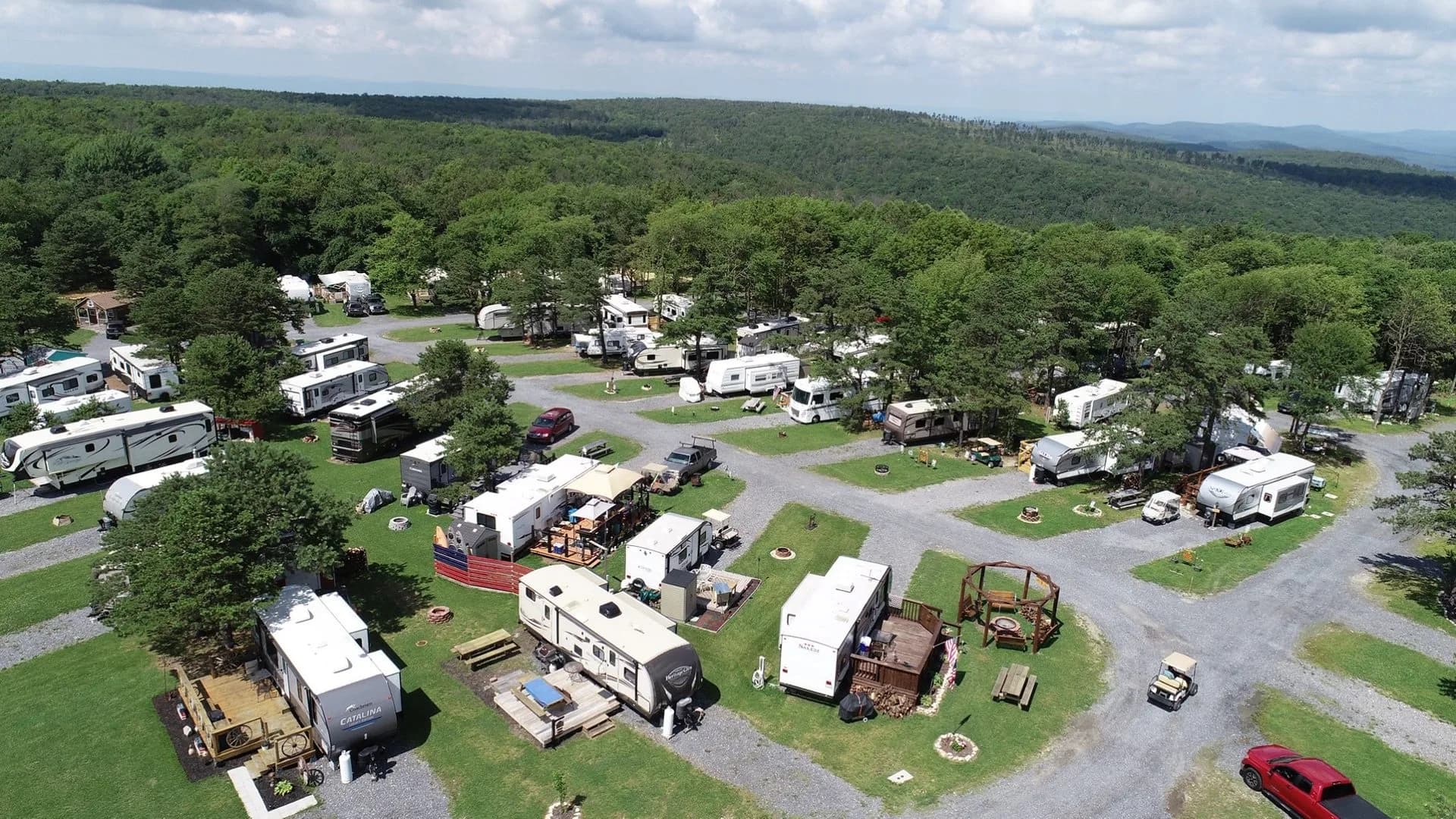
Pine Ridge Campground offers seasonal RV sites nestled in the beautiful Michaux State Forest, just 30 minutes from Gettysburg.