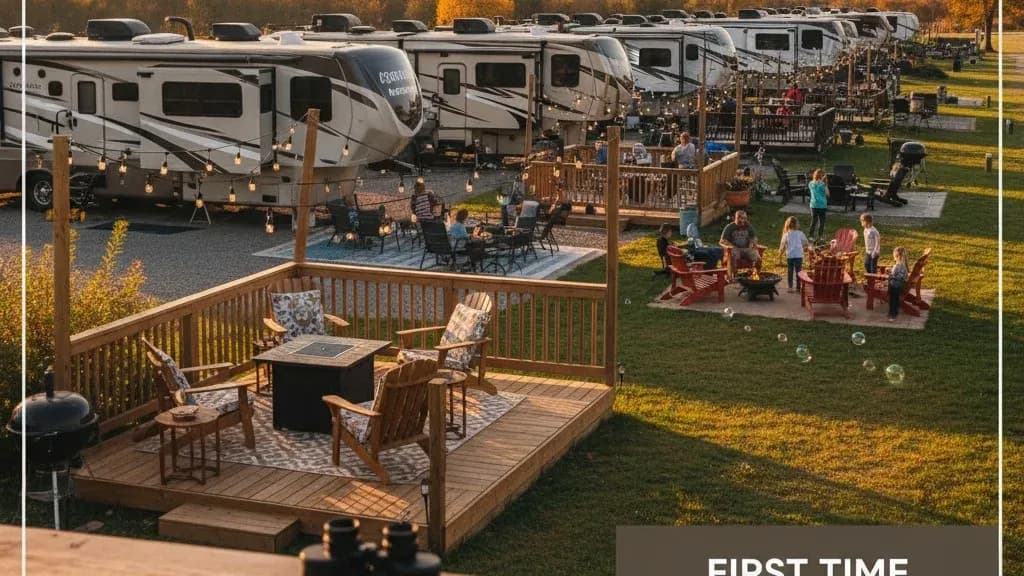
First-Time Seasonal Camping: The Complete Beginner's Guide
Planning your first seasonal camping season? Learn about site selection, hookup requirements, costs ($3,500-$4,500), and what makes seasonal camping different from weekend trips.

Owner, Pine Ridge Campground
Army veteran and entrepreneur who co-founded Pine Ridge Campground in 2017. With years of hands-on experience in seasonal RV camping and campground operations, Jamie shares practical insights for campers exploring Pennsylvania.
Imagine for a second that it's a Friday afternoon in mid-July. Instead of checking your tire pressure, wrestling with a weight-distribution hitch, or praying that the "first-come, first-served" loop still has a level spot, you're simply pulling into your favorite driveway in the woods. Your deck is already built, your outdoor rug is swept, and your neighbors are waving from their golf carts because they actually know your name. This is the "secret sauce" of seasonal camping—trading the stress of the road for the serenity of a permanent summer home.
After 15 years of living the seasonal life across Pennsylvania, I've learned that the transition from weekend warrior to seasonal resident is the best move an RVer can make, but it's not without its learning curves. You aren't just "camping" anymore; you're managing a secondary property that happens to have wheels. Whether you're eyeing a spot near the historic battlefields of Gettysburg or a mountain retreat in the Michaux State Forest, getting your first season right requires a shift in mindset.
Why This Matters for Campers
The most significant benefit of seasonal camping is the reclamation of your time. In the transient camping world, you spend four hours of every weekend on "the chores": packing the fridge, hitching up, driving, leveling, and reversing the whole process on Sunday. Over a six-month season, that's nearly 100 hours of manual labor and windshield time. Seasonal camping gives those 100 hours back to you for hiking, swimming, or simply watching the fog roll off the mountains at 2,000 feet of elevation.
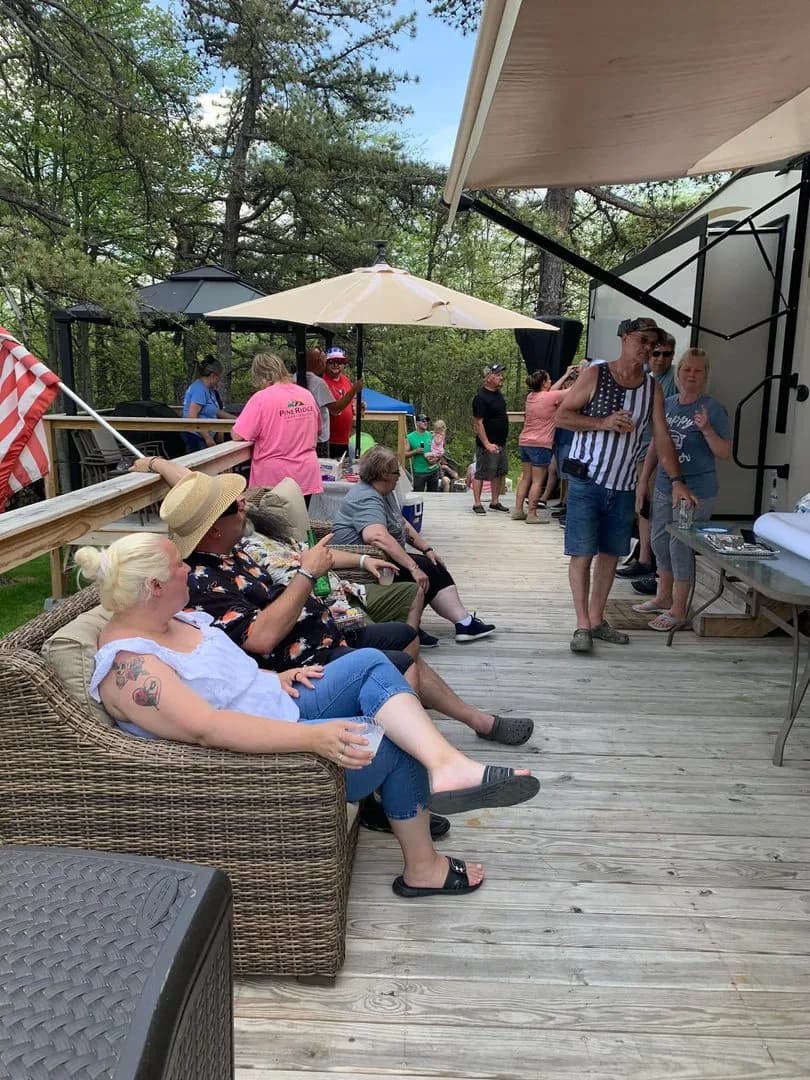
Beyond the time savings, there is the community aspect. I've seen lifelong friendships forged over a shared bag of charcoal. In a seasonal park, you aren't surrounded by strangers who disappear on Monday morning. You're part of a neighborhood. For families, this means your kids have a consistent "summer crew" at the pool. For retirees, it means having neighbors who look out for your rig when you aren't there.
Financially, it also starts to make sense if you camp more than 30-40 nights a year. When you factor in the skyrocketing cost of diesel and the $70-$100 nightly rates at premium parks, a seasonal fee—typically ranging from $3,500 to $4,500 depending on the amenities—often pays for itself by mid-summer. Plus, you save the wear and tear on your truck, which is no small expense in today's economy.
Key Information and Facts
When you're shopping for your first seasonal site, you need to look past the playground and the pool. You need to look at the "bones" of the operation. Here is the technical breakdown of what actually matters for a long-term stay:
Power and Hookups Don't assume every site is created equal. Many older parks in Pennsylvania only offer 30-amp service, which can be a nightmare in August when you're trying to run two A/C units and a microwave. You want a site with 50-amp capability, even if your current rig only needs 30. It future-proofs your investment. At Pine Ridge Campground, for instance, all 141 sites are full-hookup with 20/30/50 amp options, which is a gold standard for seasonal living.
Site Topography and Drainage Look at the ground. Is the site carved into a slope? Does the gravel look fresh, or is it buried under mud? A seasonal site is your yard for six months. If it doesn't drain well, your outdoor rug will become a swamp. I always recommend visiting a potential site after a heavy rain. If there's standing water near the sewer outlet or under the stabilizer jacks, keep looking.
The "Six Month" Reality In Pennsylvania, most seasonal parks run from April 1st through September 30th. You need to plan for the "shoulder" months. April in the Michaux State Forest can still see frost, and late September nights at 2,050 feet of elevation can get chilly. Make sure your RV's underbelly is enclosed or that you're prepared to use your propane furnace frequently during these windows.
Connectivity in the Wild We all go to the woods to "unplug," but the reality is that we still want to stream a movie on a rainy Tuesday or check emails. Traditional campground Wi-Fi is notoriously bad because it's shared among hundreds of people. Look for parks that have invested in Fiber WiFi. Having a dedicated high-speed connection at your site is the difference between a frustrating weekend and a seamless summer.
Tips and Best Practices
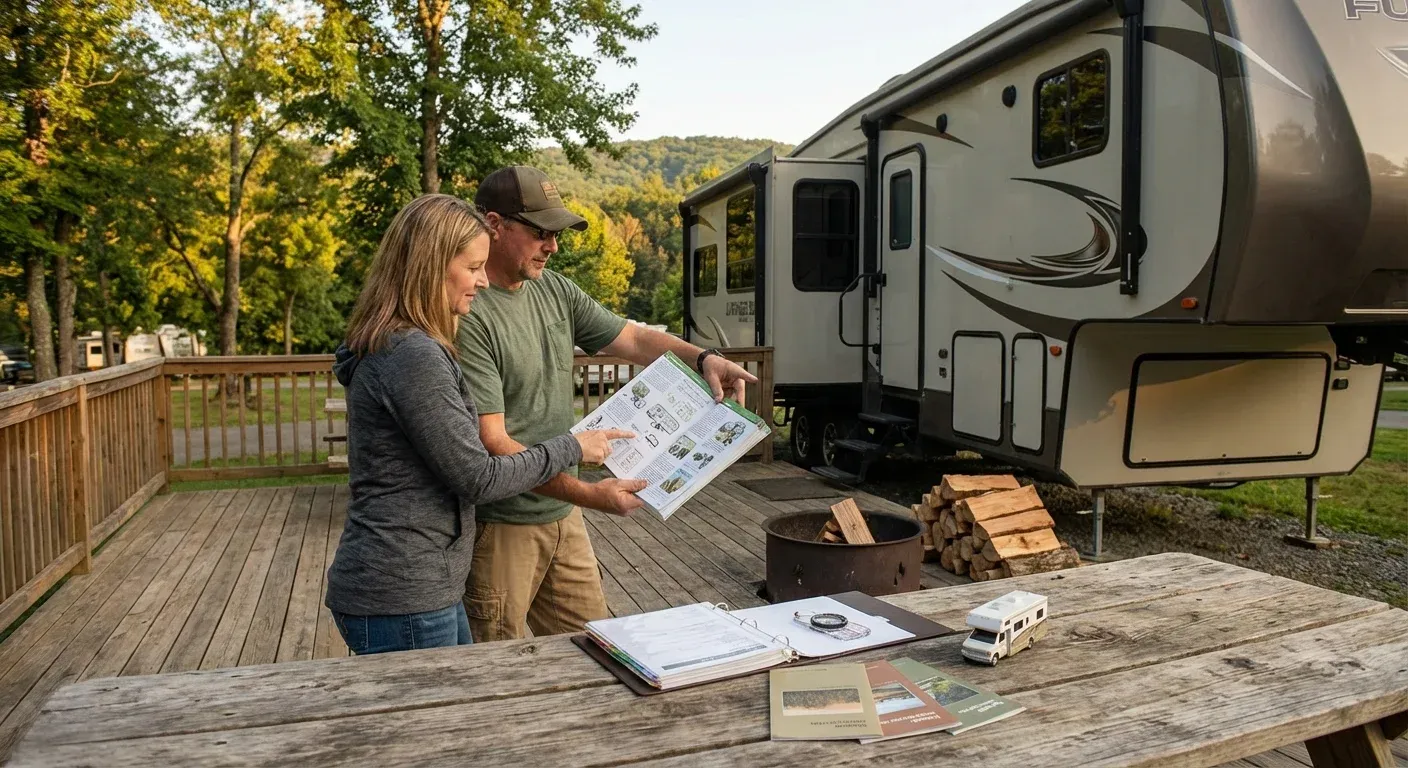
After a decade and a half of doing this, I've made every mistake in the book. Here is the "insider" advice for your first year:
- Invest in a Permanent Sewer Solution: Ditch the "stinky slinky" (the accordion-style plastic hose). For a seasonal site, you want PVC piping. It's sturdier, doesn't degrade in the UV rays, and you won't have to worry about a "poop-pocalypse" if a weed whacker gets too close to your hookups. Just make sure you still use a P-trap or a proper slope to prevent odors.
- The Deck Dilemma: Most seasonal campers want a deck. Before you buy a single pressure-treated 2x4, check the park's rules. There are usually strict limits on size (often 8x10 or 8x20) and height. Some parks require "sections" so the deck can be moved if needed.
- Manage Your Humidity: Since your RV will be sitting in the woods all summer, humidity is your enemy. Mold can take over an RV in three weeks if it's closed up tight. I always run a 30-pint dehumidifier inside the rig, draining directly into the gray tank. It keeps the "RV smell" away and protects your electronics.
- Pest Control is Non-Negotiable: You are in the forest. Field mice and ants see your RV as a luxury hotel. I swear by "Mouse Free" coating on the undercarriage and keeping all food in airtight plastic bins. Never leave a bag of dog food on the floor; you're just inviting a local raccoon to a buffet.
- Winterization Knowledge: Since you aren't pulling the rig home, you'll be winterizing it on-site. Learn how to blow out your lines with an air compressor and where your bypass valves are. Even in a well-managed park, a surprise freeze in early November can crack a plastic water filter housing in seconds.
How Pine Ridge Fits In
If you're looking for a place to start this journey, Pine Ridge Campground offers a very specific, high-quality experience that avoids many of the common pitfalls of seasonal camping. Located at a high elevation of 2,050 feet within the Michaux State Forest, it's a true mountain escape.
What makes it unique is the strict "Seasonal Only" policy. There are no transient campers coming and going at 2 AM, no "weekend warriors" who don't know the quiet hours, and no revolving door of strangers. This creates a stable, secure environment where everyone is an "owner" of their space.
The location is also a major strategic advantage. You're only 30 minutes from the historical depth of Gettysburg, but you're physically nestled in the forest. You can spend your morning hiking a section of the Appalachian Trail (which is right nearby) and your afternoon at a local winery or the Corn Crib Bar on-site. Being family-owned since 2017, it lacks that "corporate" feel you find at many chain parks. You're dealing with people who actually live on the property and care if your power pedestal is working.
Getting Started
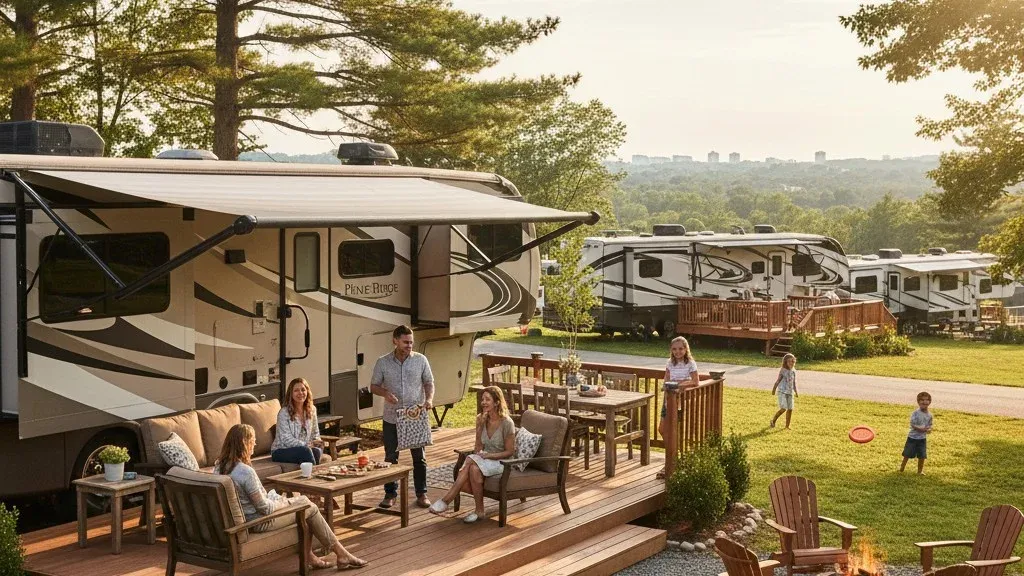
Ready to take the plunge? Your first step isn't buying a new camper; it's finding the right "dirt." Most high-quality seasonal parks, especially those in prime locations like Biglerville or near the PA/MD border, have waiting lists or limited availability.
- The Site Visit: Never sign a seasonal lease sight-unseen. Walk the site. Check the distance to the bathhouse and the pool. Imagine where your grill will go.
- Read the Rules: I know, it's boring. But you need to know if you can have a golf cart, what the pet leash requirements are (at Pine Ridge, pets are welcome but must be leashed), and what the guest policy looks like.
- The Budget: Factor in your seasonal fee ($3,500-$4,500), but also your electric bill (most sites are metered), your winter storage fee if applicable, and your insurance.
- The Setup: Plan to spend your first two weekends just "setting up." Leveling the rig perfectly, setting up your outdoor kitchen, and getting your Fiber WiFi connected.
Seasonal camping changed the way I experience the outdoors. It moved me from being a "tourist" in nature to being a "resident" of it. There is nothing quite like the feeling of Friday evening at Pine Ridge, sitting by a fire as the sun sets over the Michaux mountains, knowing you don't have to pack up and leave in 48 hours.
If you're ready to stop hauling your home every weekend and start building a lifestyle, we'd love to have you in our community. Our 141 full-hookup sites fill up fast because of our unique location and "seasonal-only" atmosphere. To see our current availability, view our site map, or learn more about our 6-month season from April to September, head over to our seasonal information page. Your permanent spot in the Pennsylvania mountains is waiting for you. Apply for a seasonal site at Pine Ridge Campground here.
Continue Reading
More guides and tips for your camping journey
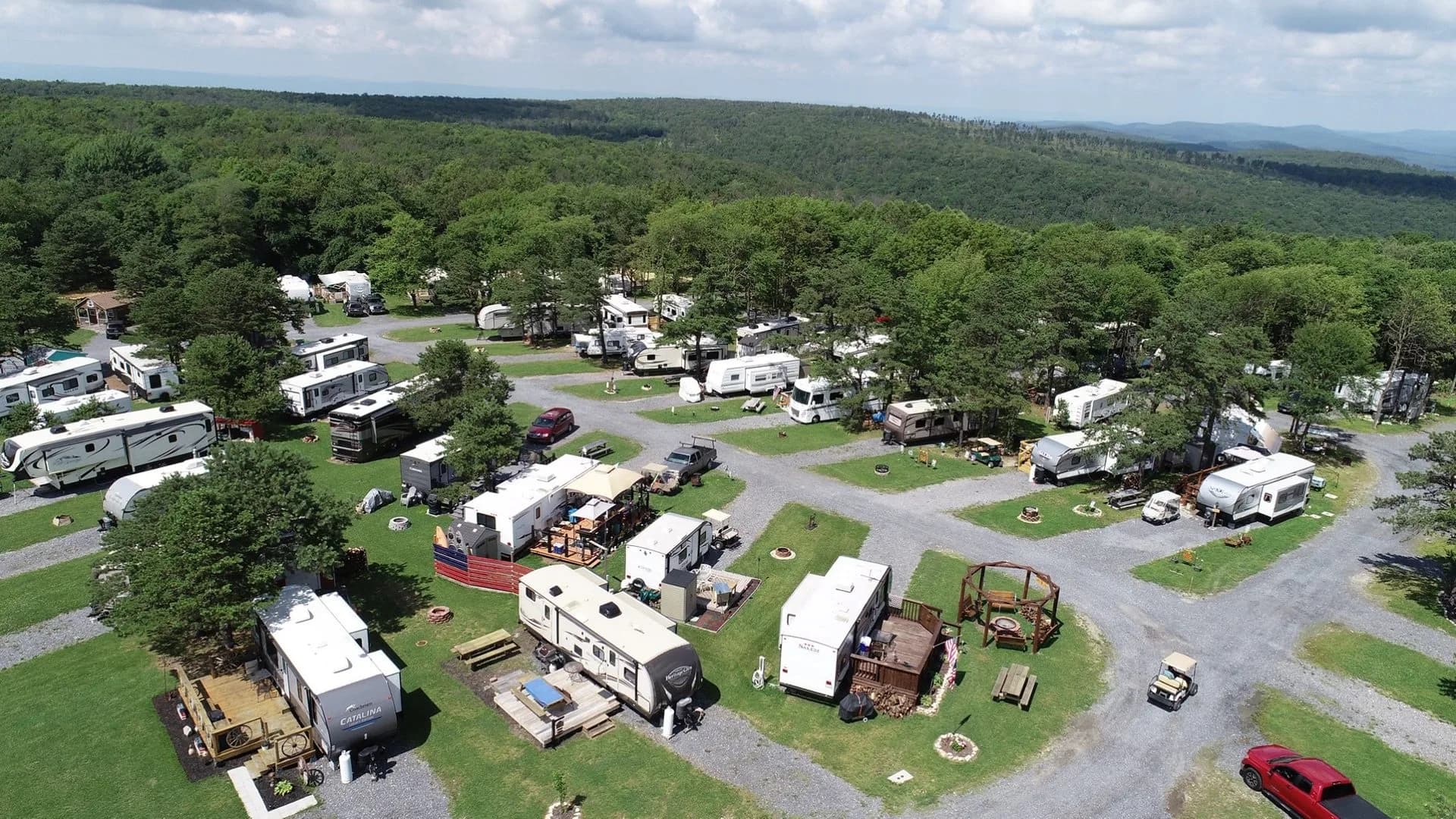
Start Your Seasonal Camping Journey
Pine Ridge Campground offers seasonal RV sites nestled in the beautiful Michaux State Forest, just 30 minutes from Gettysburg.