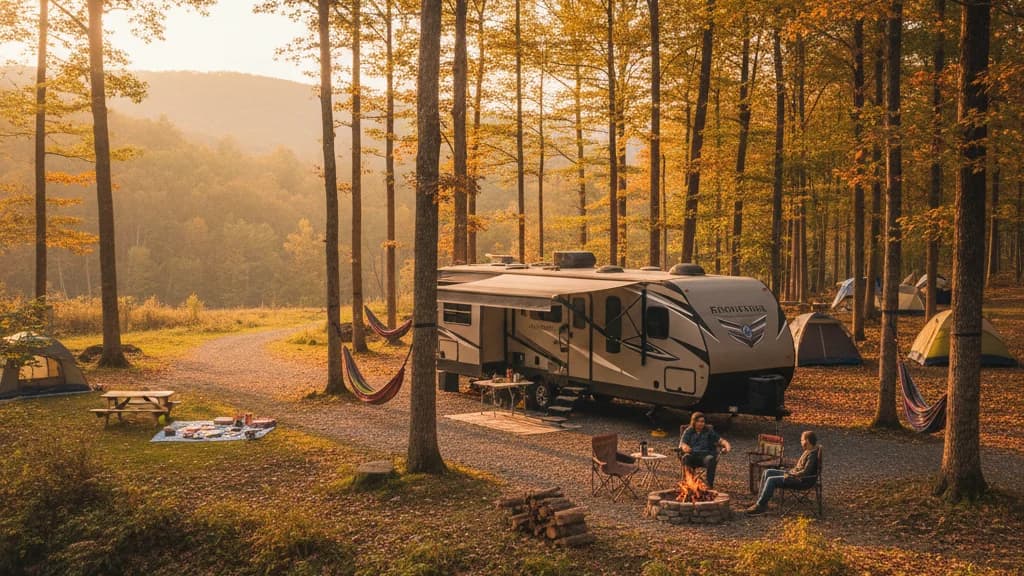
Rv Camping For Beginners Guide
Level up your camping game with these proven approaches to rv camping for beginners guide.

Owner, Pine Ridge Campground
Army veteran and entrepreneur who co-founded Pine Ridge Campground in 2017. With years of hands-on experience in seasonal RV camping and campground operations, Jamie shares practical insights for campers exploring Pennsylvania.
The first time I backed a rig into a tight spot, my palms were sweating so much I could barely grip the steering wheel, and my "spotter" (my very patient spouse) was using hand signals I’m fairly certain she made up on the fly. That was fifteen years ago. Since then, I’ve navigated everything from the windswept plains to the 2,050-foot peaks of the Michaux State Forest. If you are feeling that mix of excitement and "what have I gotten myself into?" nerves, you are in the right place. RVing isn't just about the vehicle; it’s about the freedom to wake up to the smell of damp pine needles and the sound of a mountain stream without giving up a comfortable mattress.
Introduction to RV Camping for Beginners Guide
Entering the world of RVing is like learning a new language. Suddenly, you care about things like "gray water capacity," "tongue weight," and "30-amp vs. 50-amp service." For beginners, the learning curve can feel steep because an RV is essentially a rolling house that undergoes a minor earthquake every time you drive it down the highway.
In this guide, we aren't just going to talk about how to turn on the water heater. We are going to dive into the lifestyle—the nuances of choosing a home base, the technical realities of Pennsylvania camping, and how to transition from a weekend warrior to someone who truly understands the rhythm of the woods. Whether you are looking at seasonal camping near Gettysburg or planning a cross-country trek, the fundamentals remain the same: preparation prevents a lot of headaches at the dump station.
Why This Matters for Campers
Why do we do this? Why not just book a hotel? Because a hotel doesn't offer a front-row seat to the National Apple Harvest Festival or allow you to keep your favorite cast-iron skillet in the cupboard all summer long.
For many, the transition to RVing—specifically seasonal RVing—is about community and consistency. When you have a dedicated spot, you skip the "Sunday Scaries" of packing up and hauling your rig home. You learn which neighbors have the best firewood and which trail leads to the best sunset view. In regions like South Central Pennsylvania, having a home base means being minutes away from the Carlisle car shows or a quick drive from Hagerstown without ever having to check out by 11:00 AM. It matters because it turns "vacation" into a lifestyle.
Key Information and Facts
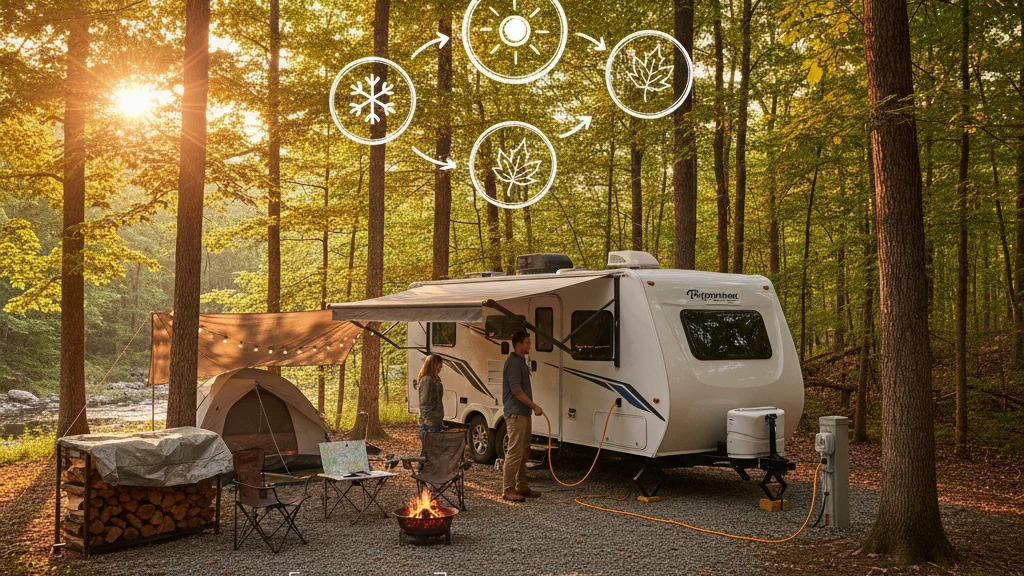
Before you buy your first rig or book your first site, you need to understand the mechanical and logistical "Big Three": Power, Water, and Waste.
1. The Power Play Most modern RVs run on either 30-amp or 50-amp electrical systems. A 30-amp plug has three prongs; a 50-amp has four. You cannot simply plug a 50-amp coach into a 30-amp outlet without an adapter (often called a "dogbone"), and even then, you won't be able to run both AC units at once. At Pine Ridge Campground, we provide full-hookup sites with 20, 30, and 50-amp options to accommodate everything from vintage campers to modern fifth wheels.
2. Water Systems You have two ways to get water: your fresh water tank (onboard) or a "city water" connection. When you're at a full-hookup site, you’ll use a white, lead-free RV water hose. Pro tip: Always use a water pressure regulator. Campground water pressure can fluctuate, and the plastic PEX piping in an RV isn't designed to handle 100 PSI without bursting a joint behind your shower wall.
3. The "Stinky Slinky" (Waste) Your RV has two waste tanks: Gray (soapy water from sinks/shower) and Black (toilet waste). Most beginners make the mistake of leaving their black tank valve open when hooked up to a sewer. Don't do this. You need liquid to help solids flow out. Keep the valve closed until the tank is at least 2/3 full, then dump. If you are staying at a park without individual sewer hookups, you'll become very familiar with the rv dump station.
4. Pennsylvania's Unique Geography If you're camping in the Michaux State Forest area, you're dealing with elevation. Pine Ridge sits at over 2,000 feet. This means it’s often 5-10 degrees cooler than nearby Waynesboro or Frederick. It also means your refrigerator might struggle a bit more on propane mode due to the thinner air—something many beginners don't realize until their milk is lukewarm.
Tips and Best Practices
After 15 years, I’ve realized that the "best" gear isn't always the most expensive—it’s the most practical. Here is the "insider" list for beginners:
- The Leveling Rule: Never trust your eyes. An RV that is slightly unlevel isn't just annoying for sleeping; it can actually damage a propane absorption refrigerator. The cooling liquid needs gravity to flow correctly. Invest in a set of "Lego" leveling blocks and a 2-foot carpenter's level.
- The Surge Protector is Non-Negotiable: A power surge at a campground can fry your microwave, AC control board, and fridge in seconds. Buy an EMS (Electrical Management System) that shuts off power if it detects low voltage or a ground fault. It’s a $300 investment that saves a $30,000 rig.
- Check Your Roof Twice a Year: RV roofs are usually EPDM rubber or TPO. The sealant around vents and fans (Dicor) can crack over time. A tiny crack leads to a massive rot problem. I always tell beginners: "Water is the enemy."
- Master the "Arrival Ritual": Don't just unhitch and start drinking a beer. Check the site for low-hanging branches, locate your utilities, level the rig, chock the wheels (safety first!), and then hook up.
- Respect the Forest: When you’re near places like Long Pine Run Reservoir, you're in bear and raccoon country. Never leave a bag of trash outside your camper door overnight unless you want a very messy 3:00 AM wake-up call.
How Pine Ridge Fits In
Most people start RVing by renting or doing "transient" (nightly) camping. But after a season of white-knuckled driving and fighting for reservations at crowded parks in Hershey or the Pocono Mountains, many realize they want something more permanent.
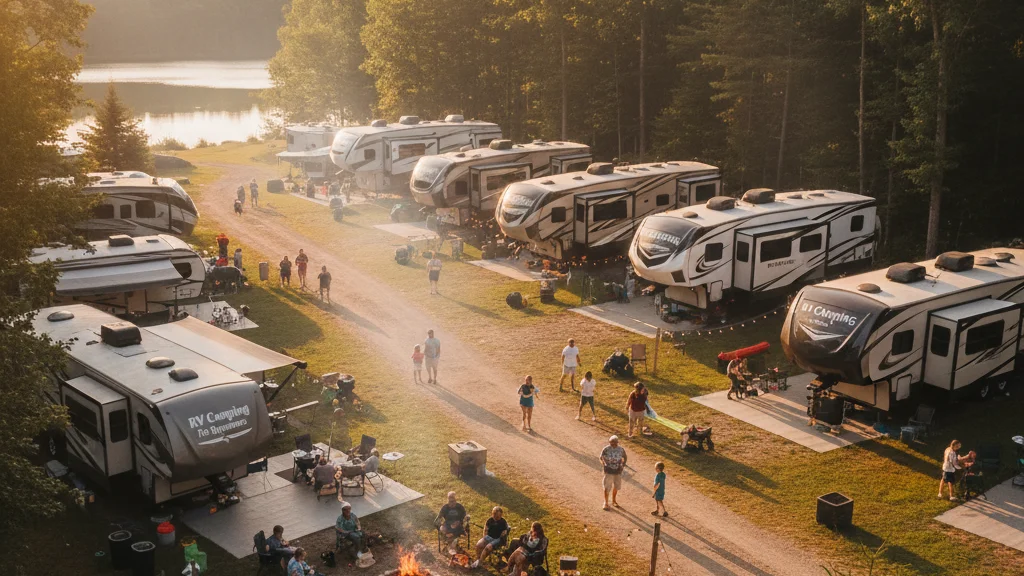
Pine Ridge Campground is unique because we are 100% seasonal. This means every person you see is a neighbor, not a stranger passing through for one night. Since we took over in 2017, we’ve focused on creating a space that feels like a mountain retreat. Because we are family-owned, you aren't dealing with a corporate office in another state; you're dealing with people who are on-site and care about the forest.
Being located in the heart of Michaux State Forest means you have immediate access to the Appalachian Trail and miles of ATV trails. It’s the perfect middle ground: you have the ruggedness of the mountains but the luxury of fiber-optic WiFi and a pool. It’s an ideal spot for someone who wants to experience the Lancaster & Amish Country culture or Raystown Lake on a day trip but return to the quiet, cool air of the Biglerville mountains at night.
Getting Started
If you're ready to take the plunge, start by visiting a few campgrounds. Don't just look at the amenities; look at the "vibe." Is it loud and paved, or is it quiet and wooded?
Step 1: Know Your Tow Vehicle If you haven't bought a rig yet, check your truck's "Payload Capacity," not just the "Towing Capacity." Payload is usually what stops beginners—the weight of the hitch, your family, and the gear in the bed adds up fast.
2. Rent Before You Buy Try a weekend in a rental to see if you prefer a Travel Trailer (towable), a Fifth Wheel (better stability), or a Class A (motorhome).
3. Consider the Seasonal Advantage If the idea of towing every weekend sounds exhausting, look into seasonal sites. At Pine Ridge, our season runs from April 1 to October 31. That’s seven months of mountain air without ever having to check your tire pressure or adjust your weight-distribution hitch. You can set up your outdoor rug, bring your favorite grill, and truly make it home.
4. Join the Community Don't be afraid to ask for help. RVers are some of the friendliest people you’ll meet. If you’re struggling with your awning or can't get your pilot light lit, chances are the guy in the next site has been there, done that, and has the tool you need in his basement storage.
RVing is about slowing down. It’s about that first cup of coffee on the steps of your camper while the mist is still hanging low over the Carlisle valley. It’s about seeing your kids (or grandkids) put down their phones to catch a toad or help build a campfire. It takes a little practice to master the technical side, but once you do, the rewards are worth every bit of the effort.
If you’re tired of the "reservation rat race" and want a permanent place to hang your hat in the beautiful Michaux State Forest, we’d love to welcome you into our community. Our seasonal sites offer the perfect blend of mountain seclusion and modern convenience, located just a short drive from the historic streets of Gettysburg. To see what’s available for the upcoming season and join our family of campers, apply for a seasonal site today or explore our seasonal sites to find your perfect mountain home base.
Continue Reading
More guides and tips for your camping journey
Start Your Seasonal Camping Journey
Pine Ridge Campground offers seasonal RV sites nestled in the beautiful Michaux State Forest, just 30 minutes from Gettysburg.